tradition in transition
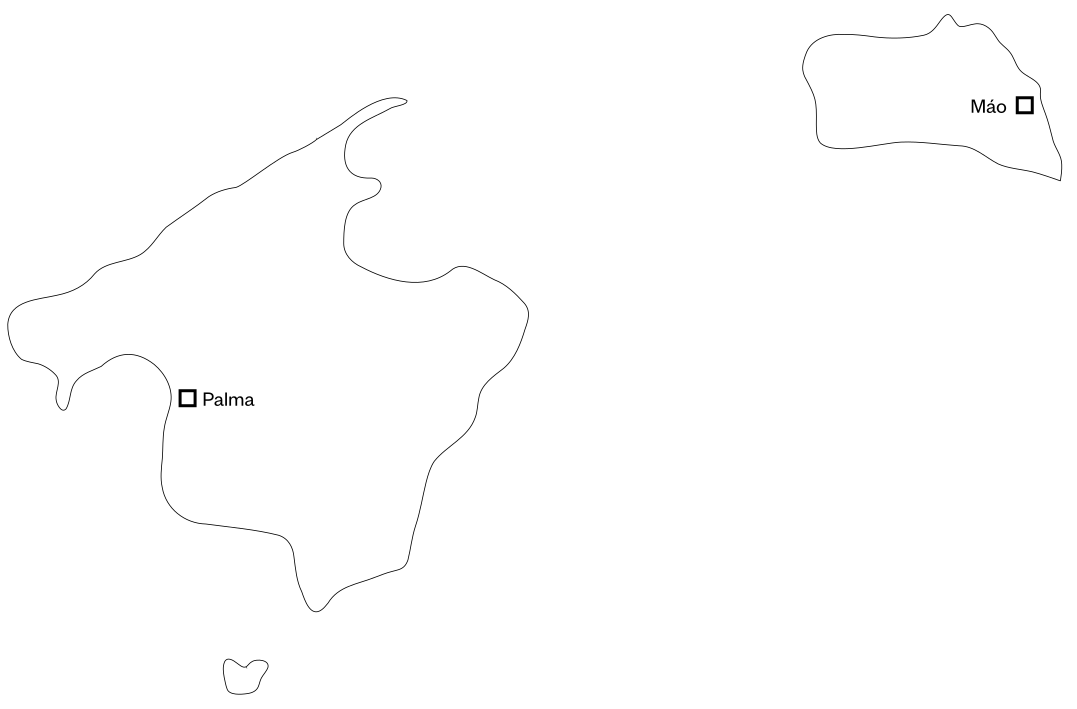
MALLORCA AND MENORCA

-
type of trip
round trip
-
ideal duration
7 days
-
recommended period
march - may
september - november - schedule a meeting
Good architecture is architecture that understands the landscape, not architecture that imposes itself on it.
The Balearic Islands reveal themselves as much more than a classic holiday destination. On Mallorca and Menorca, a contemporary architectural practice is developing that closely connects with local materials, building traditions and landscapes, while at the same time leaving room for experimentation and innovation. This art and architecture journey explores that tension and offers a rich image of how design, context and craftsmanship reinforce one another on the islands.
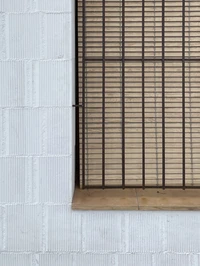
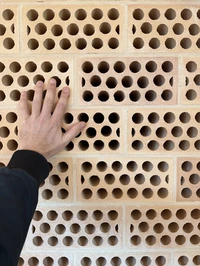
At its center is an architecture that does not conceal its origins. Local natural stone such as marès and santanyí has formed the backbone of the built landscape for centuries and acquires new meaning in contemporary projects. The Lithica quarry complex shows how extraction, space and landscape come together. Traditional materials and techniques are being re-examined and refined, as seen in contemporary timber construction and in the reinterpretation of ceramic tiles that find a place in current architecture.
On Mallorca, a layered architectural timeline unfolds. In Palma, historic buildings and dense urban structures provide a rich frame of reference. Typologies such as the patio show how spatial organization and climate response are passed down through time. This historical layering is not an obstacle, but an active breeding ground for contemporary projects in which scale, material and proportion are carefully balanced.
In addition to this urban and historical context, there is a strong focus on housing and small-scale public architecture. Contemporary homes demonstrate a precise handling of place, topography and material use. Public clients also play an important role by combining affordable housing with ecological and architectural research. Public projects function here as testing grounds for locally rooted building methods.
Art is inseparably linked to this architectural discourse. Museums, collections and studios show how art, landscape and architecture mutually reinforce one another. Together they create a route in which the islands are read as a coherent network of places, materials and ideas, far removed from the tourist cliché.
Between Mallorca and Menorca, the ferry forms an essential part of the journey, with the crossing marking a natural transition between two related but distinct architectural worlds.
highlights
Casa Huarte integrates trees and landscape, with the roof structure as a garden bringing the forest literally inside.
The discovery of a cave in the coastal rock inspired Jørn Utzon to create an architecture that seems to be excavated from the landscape as a series of pavilions.
Neuendorf House by John Pawson plays with extreme simplicity, in which proportion, material and emptiness together evoke an almost meditative intensity.
Líthica transforms an abandoned marés quarry into a sculptural landscape.
Can Lis, Jorn Utzon 1972 © Jao Smet
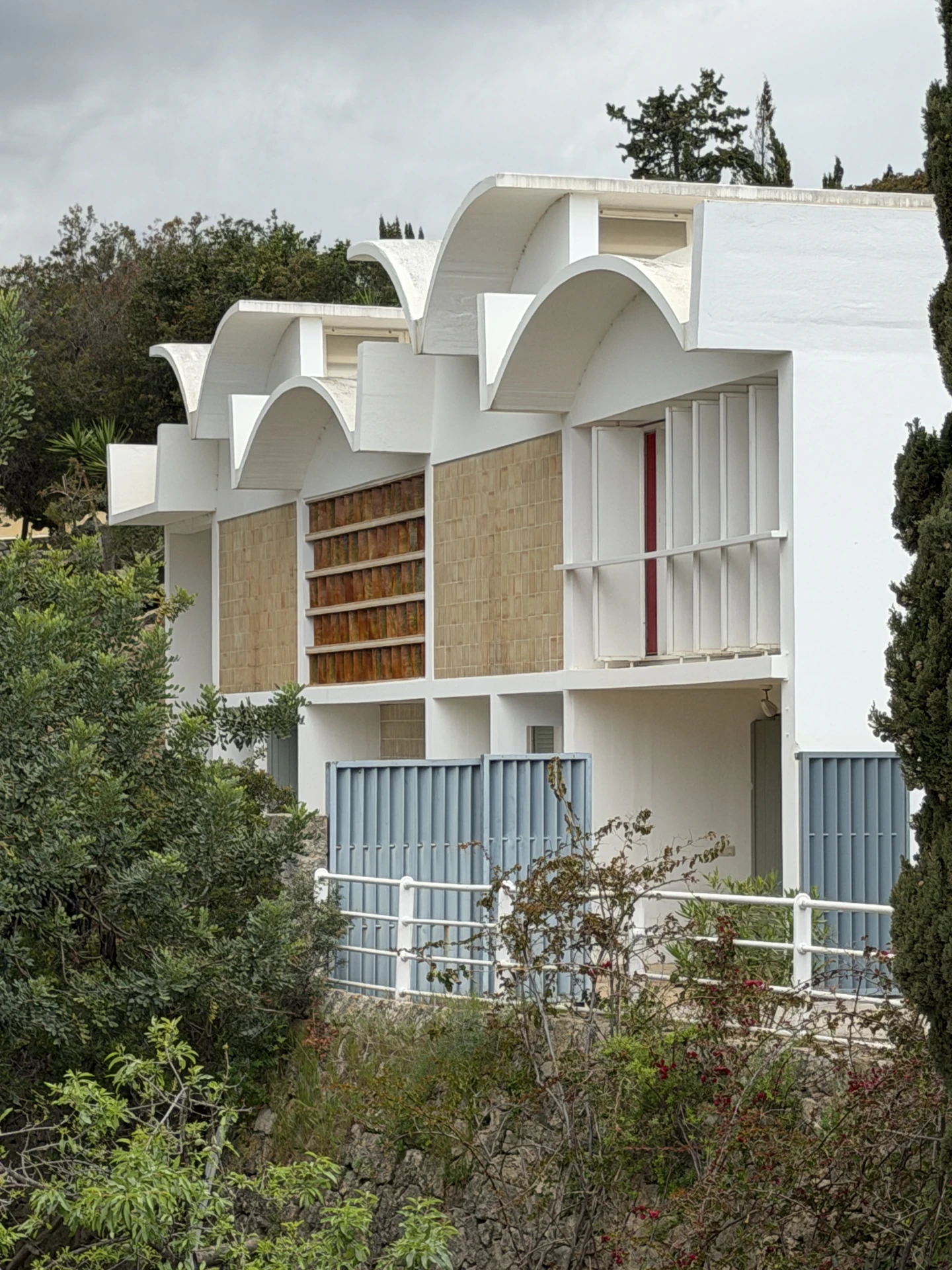
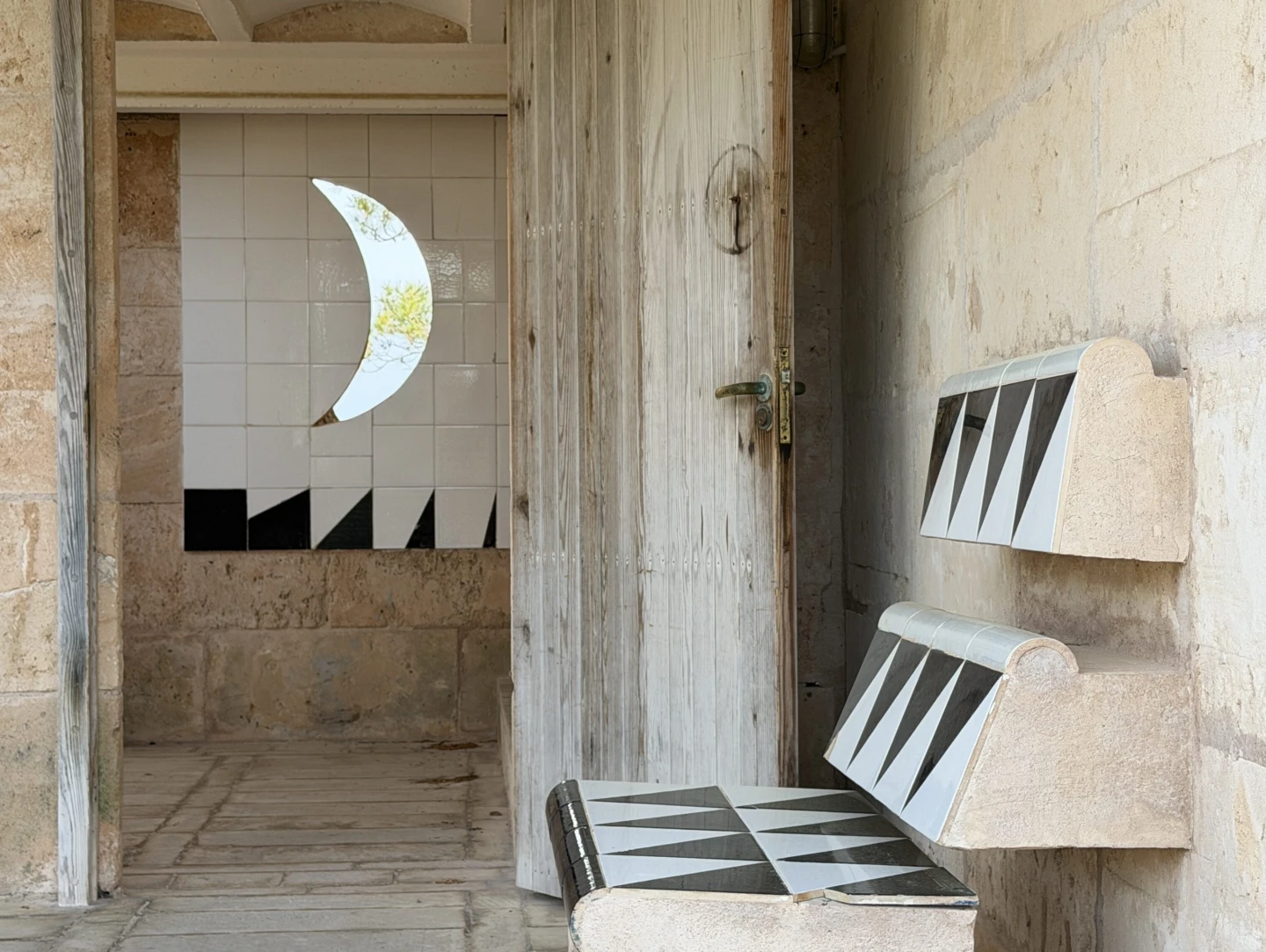
Miro Foundation, Rafael Moneo & Josep Lluís Sert 1992 © Jao Smet
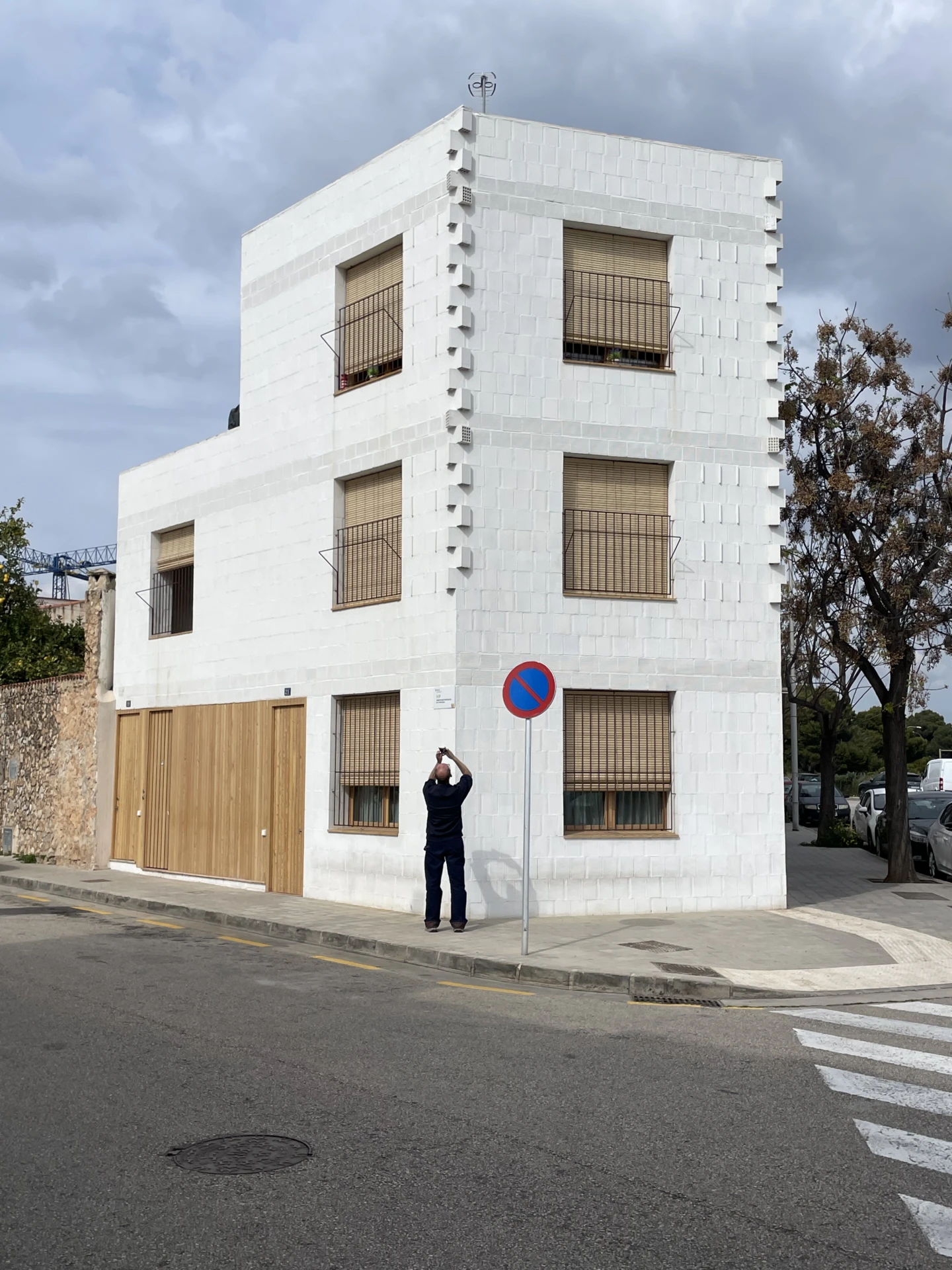
11 Social Houses in Palma, Carles Enrich Studio (IBAVI) 2024 © Mira De Cleen
more photos
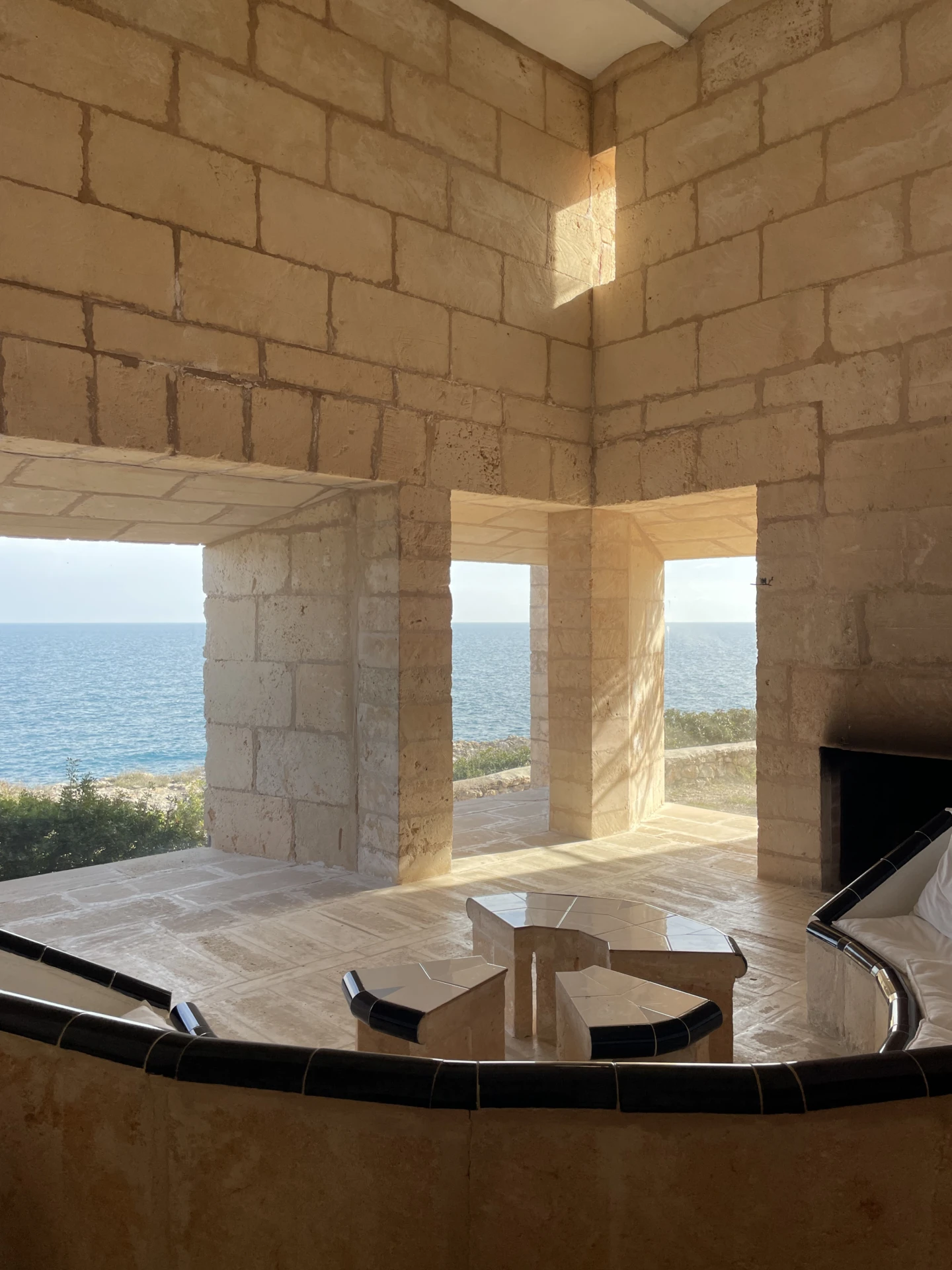
Can Lis, Jorn Utzon 1972 © Mira De Cleen
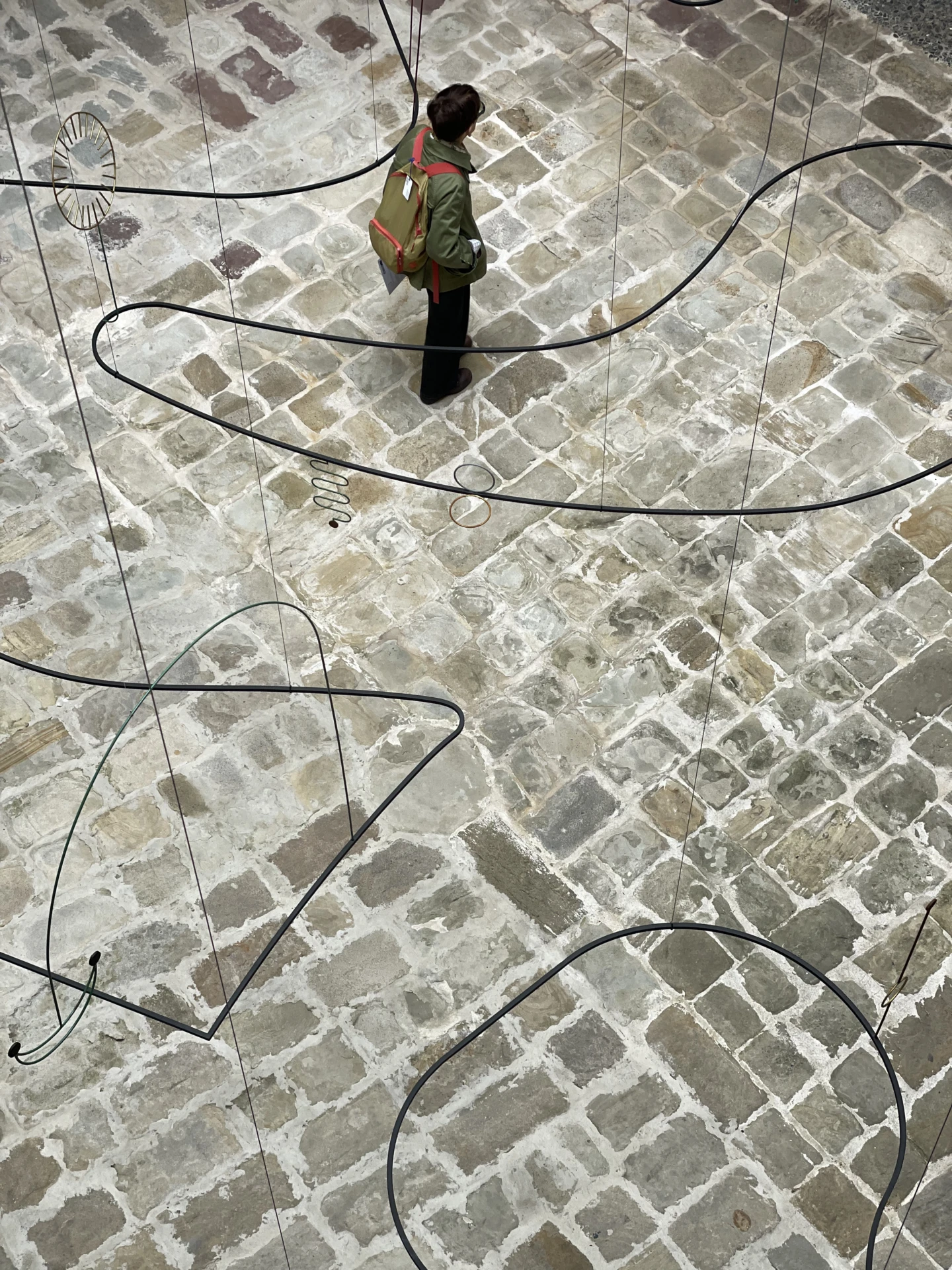
Casal Solleric © Mira De Cleen
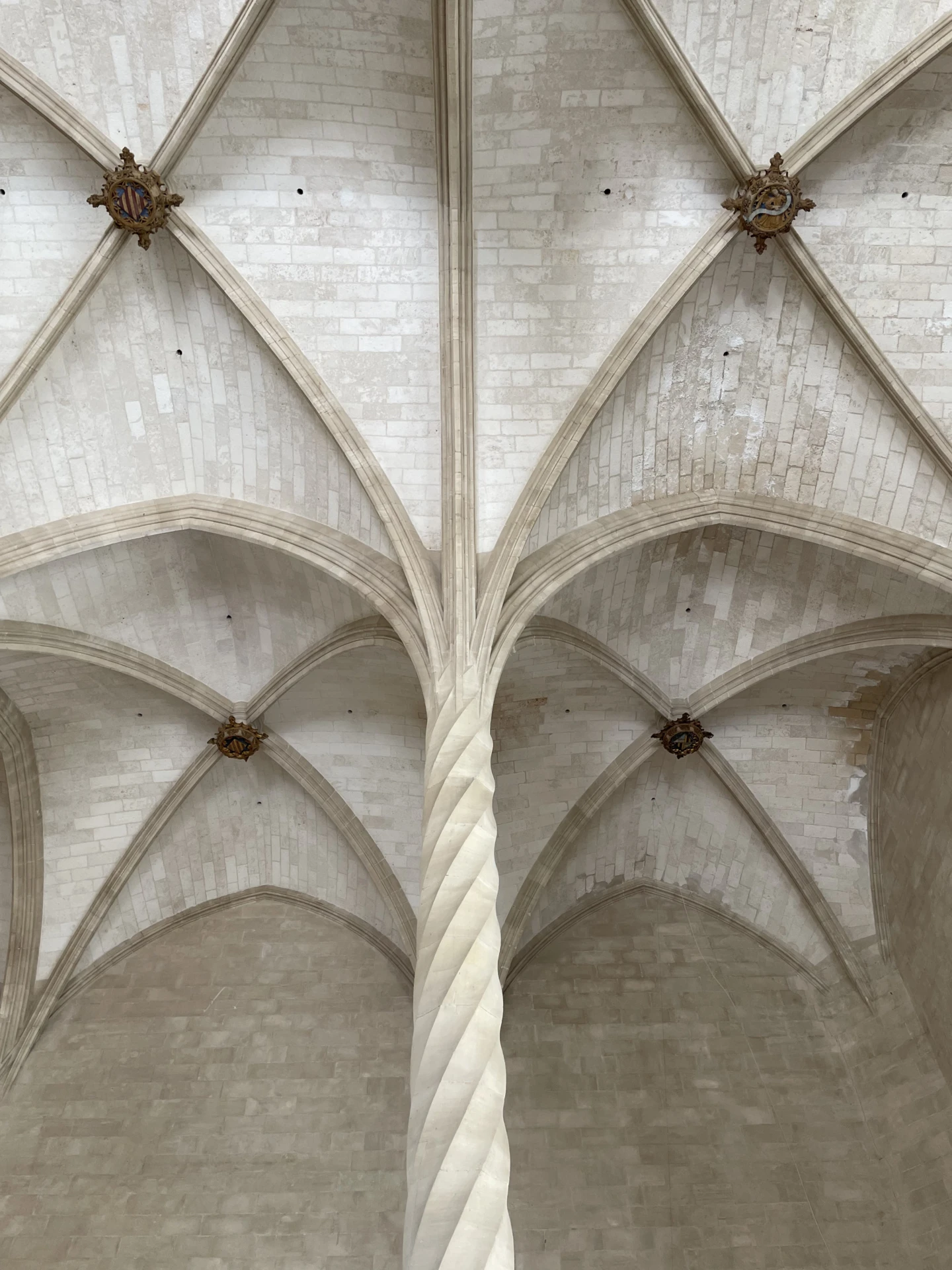
La Lonja De Palma, Aulets Arquitectes 2011 © Mira De Cleen
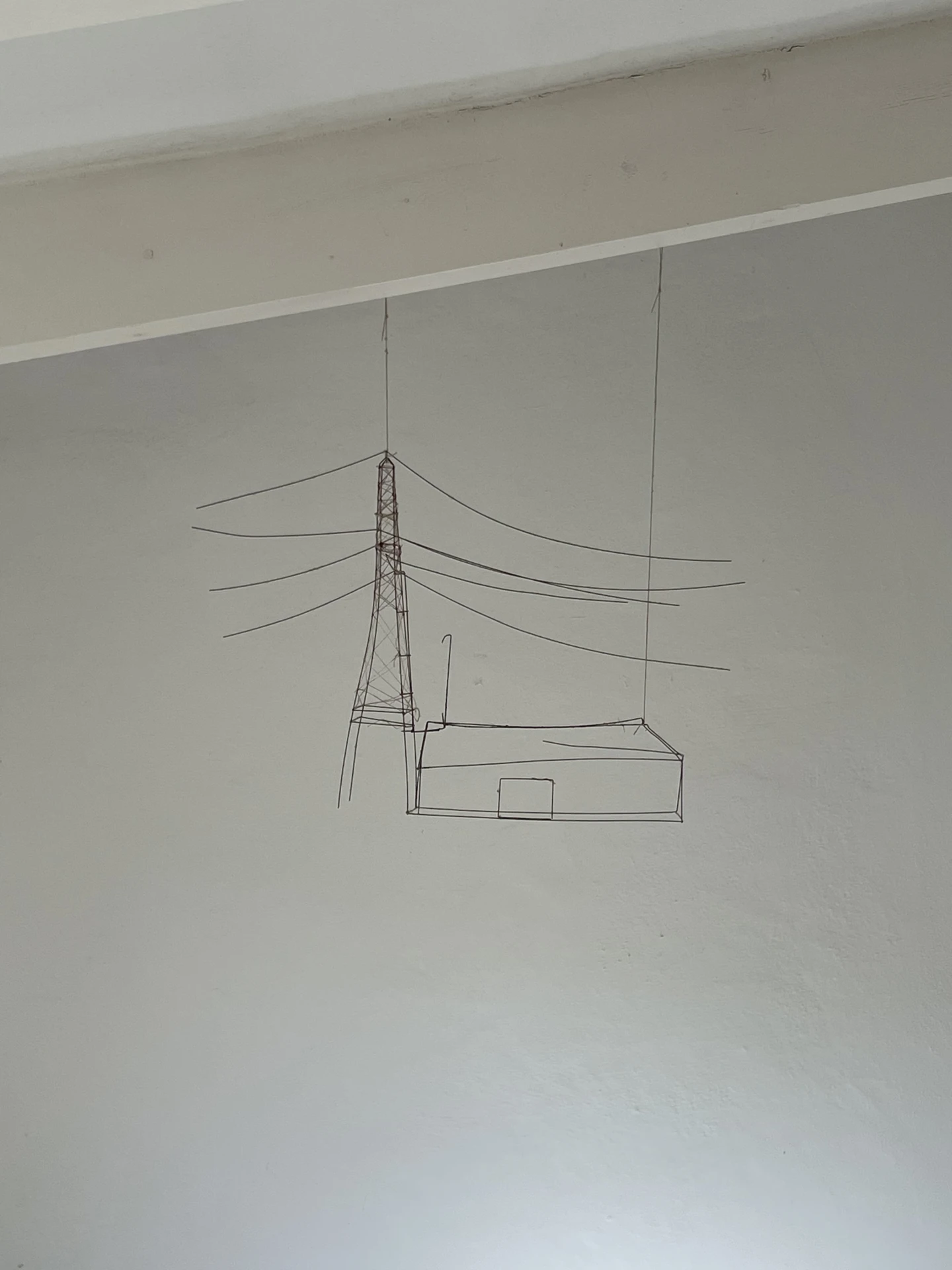
Jardin Seco, Bart & Pieter 2024 © Mira De Cleen
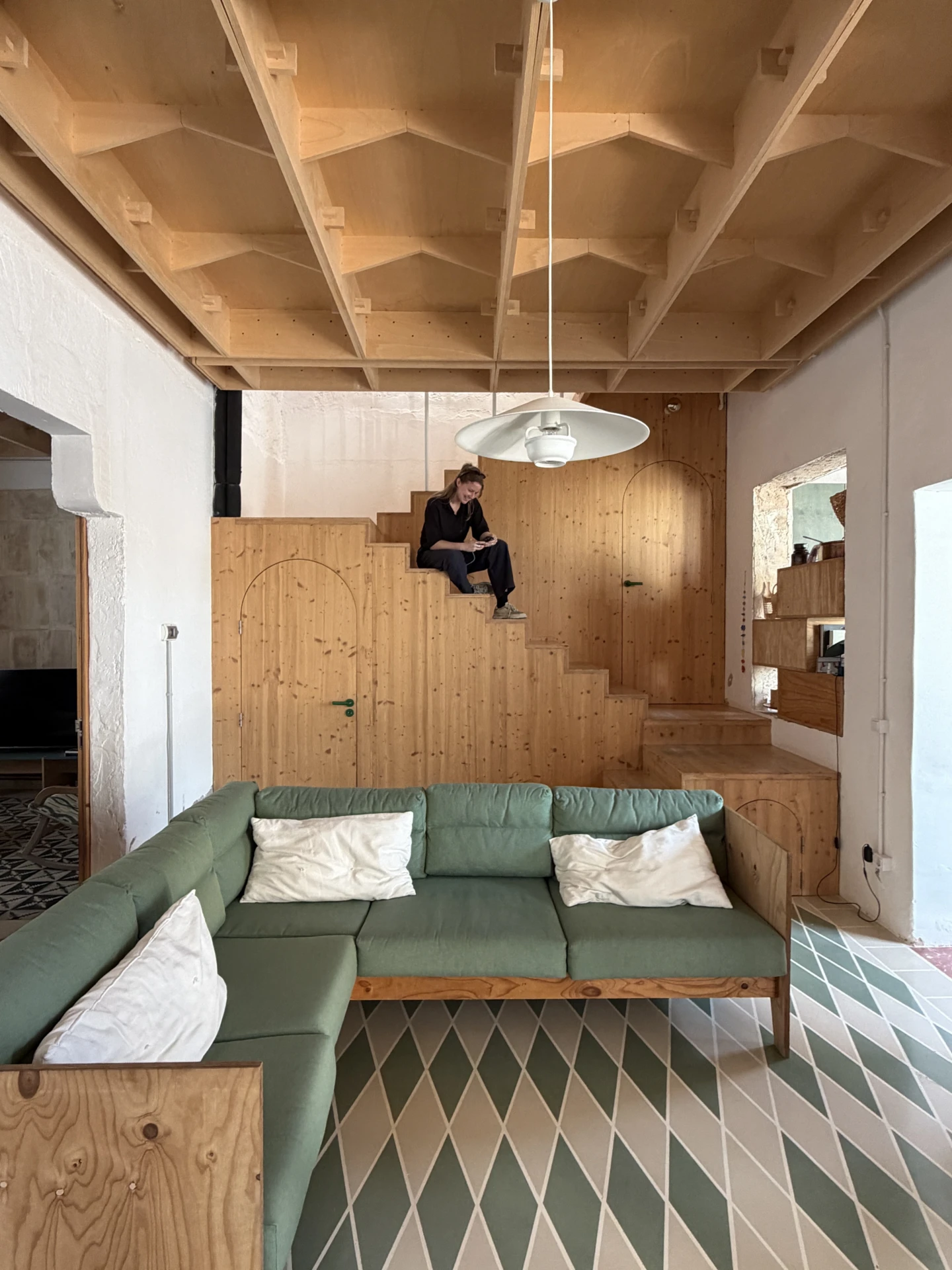
Plywood House, Feina Studio 2016 © Jao Smet
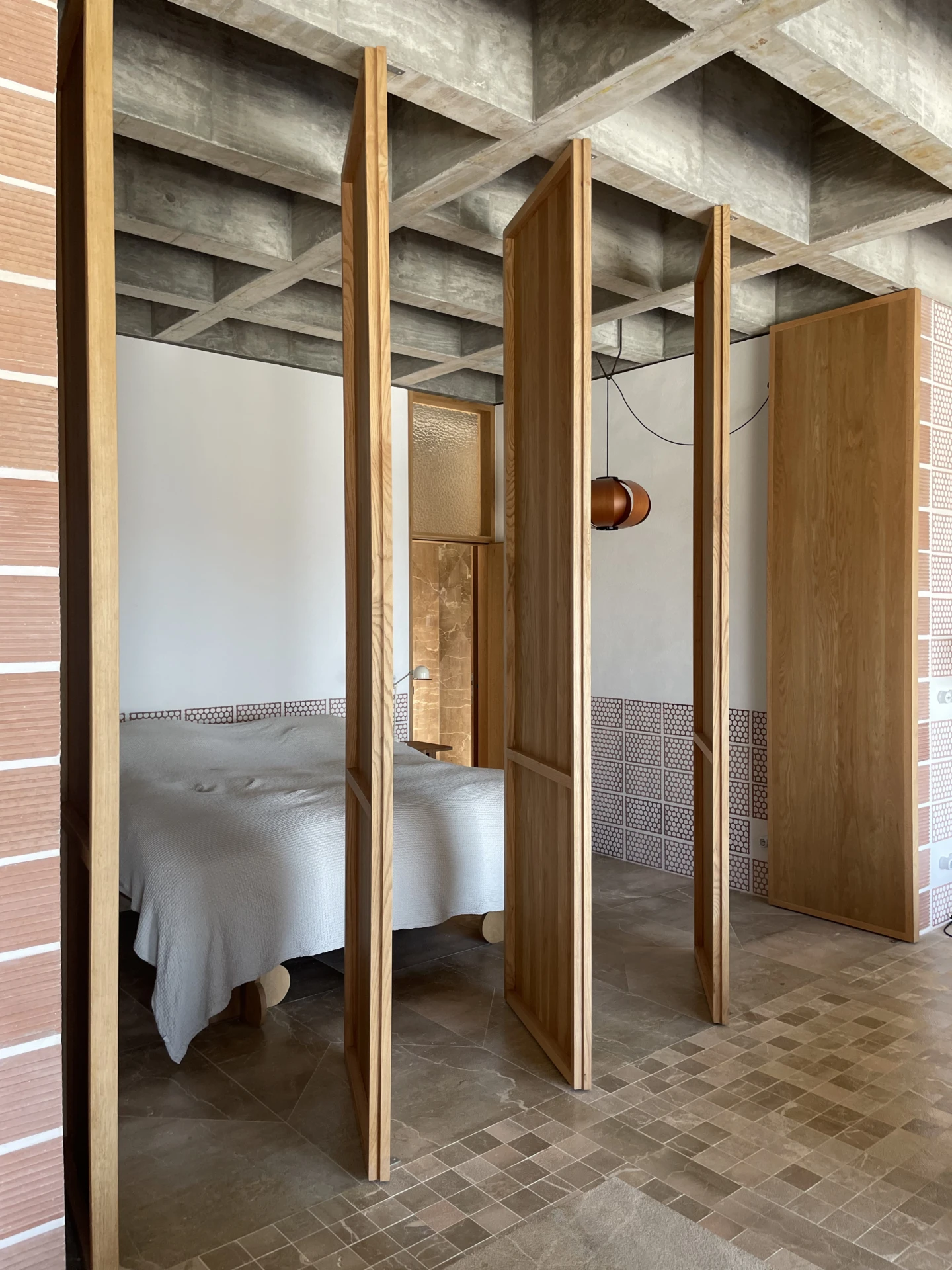
Can na Birgit, TEd'A arquitectes 2024 © Mira De Cleen
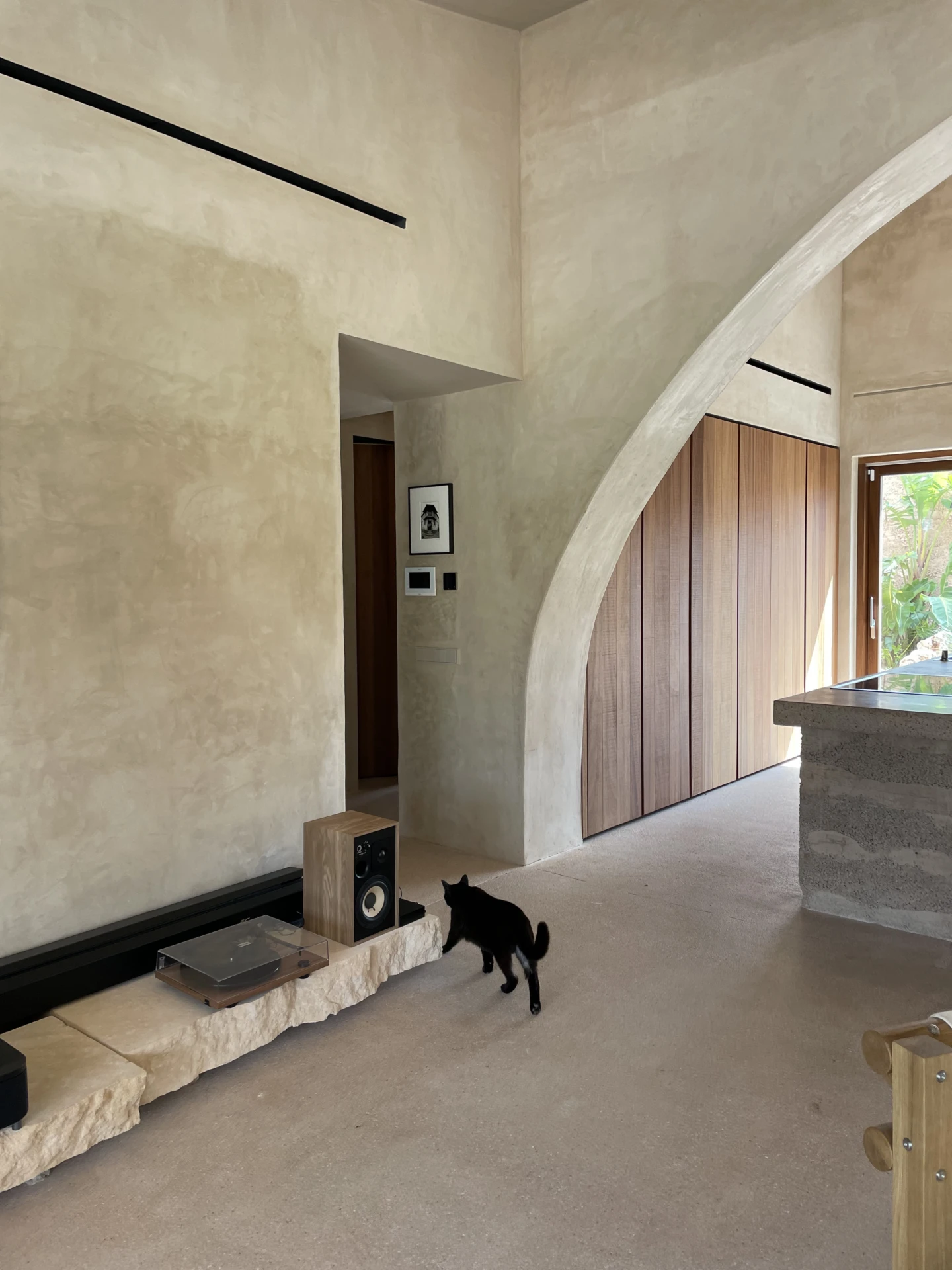
Can na Pau, Munarq 2024 © Mira De Cleen
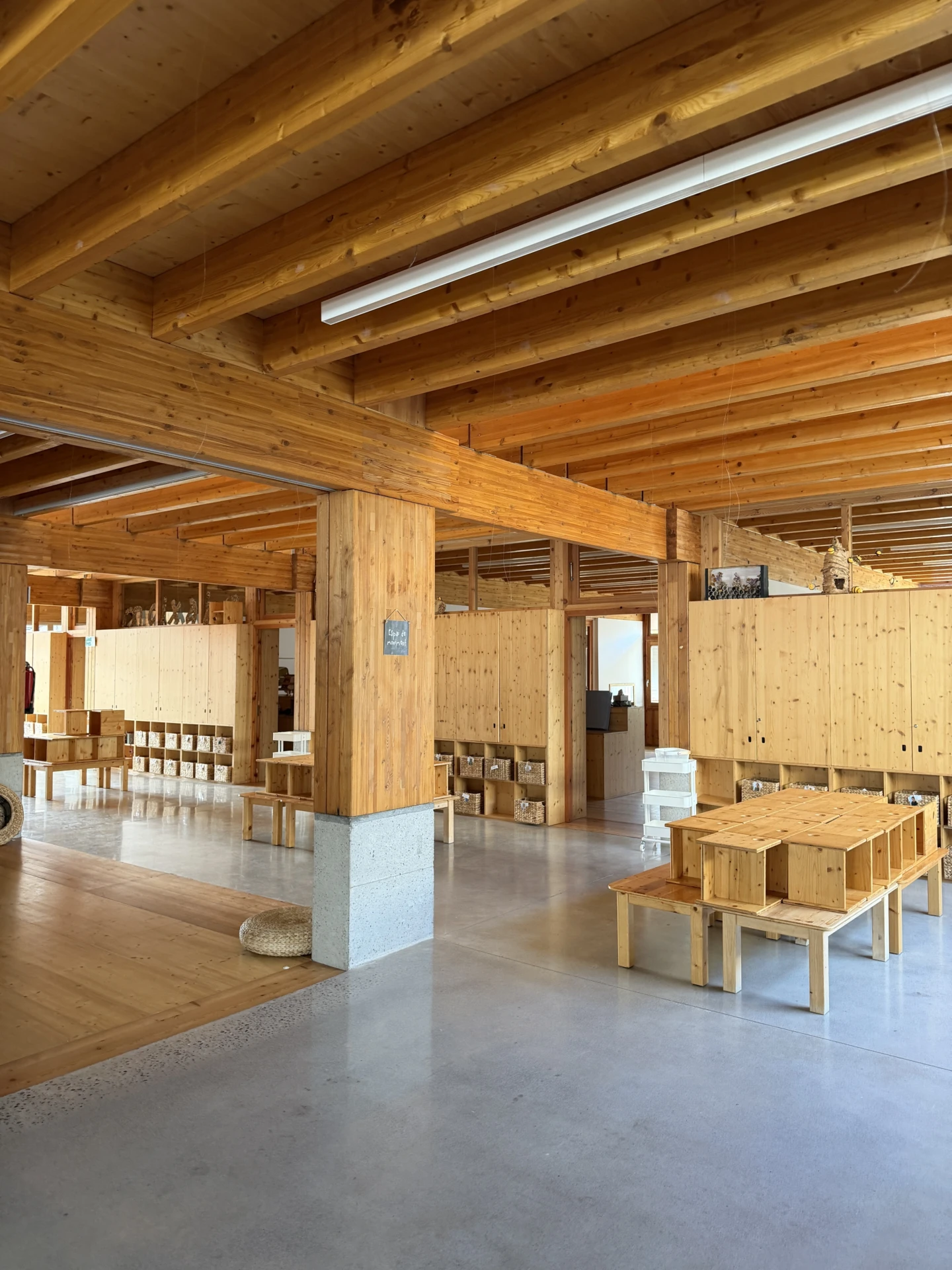
Kindergarten for Llubi, Aulets Arquitectes 2020 © Jao Smet
your travel curators
Dominique Pieters
Dominique is the founder and creative director of planopli. She is an architect by training, author, and architecture journalist for (inter)national magazines. Previously, she was artistic director of Archipel and taught at TU Delft and KU Leuven.
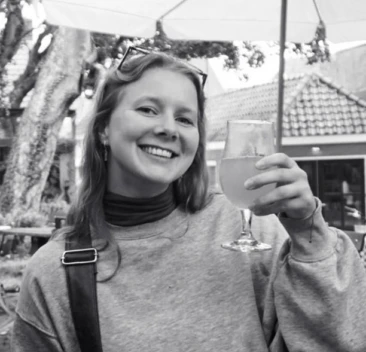
Mira De Cleen
Mira combines curating architecture trips at planopli with her work as an architect in Antwerp. Driven by a strong interest in space, visual culture and film, she volunteers at two arthouse cinemas, where architecture and cinematography meet.