el aire es azul
ALTIPLANO AND CASA WABI

-
travel dates
05.12 — 19.12.2026
-
price
from €6.900
-
sign up
the contours of the group are visible, places remain...
-
vertrek vanuit
Brussels Zaventem
- on request
I think that the ideal place must contain elements of magic, calm, and mystery. Any architectural work that does not exude serenity is a failure.
Mexican culture is characterized by romance, passion, sensuality, and tragedy. This layered quality is strongly reflected in its architecture. Mexican architecture is often reduced to its distinctive use of color. That colorful palette is unmistakable and deeply woven into the experience of the country. Intense blue, piercing red, dazzling gold, flowing white, sunlit ochre, and mysterious pink together form a visual language that expresses emotion and identity. Here, color is not decoration, but a carrier of meaning and culture.
Yet beneath this visual force lies a deeper architectural attitude. Mexican modernist architects reinterpreted international ideas not out of rebellion, but from a strong sense of self-worth. They anchored their designs in local traditions and integrated muralism as a spatial and social expression. The interplay of mass and void, rooted in pre-Columbian architecture, remains emphatically present in both modernist and contemporary projects. Architecture here is read as a succession of silence and monumentality, of shadow and light. Gardens, courtyards, walls, and fountains form introspective landscapes in which calm and contemplation prevail. Enclosed worlds direct the gaze upward and create an almost spiritual experience in which space, air, and light converge. This spatial sensitivity runs like a red thread through the Mexican architectural landscape.
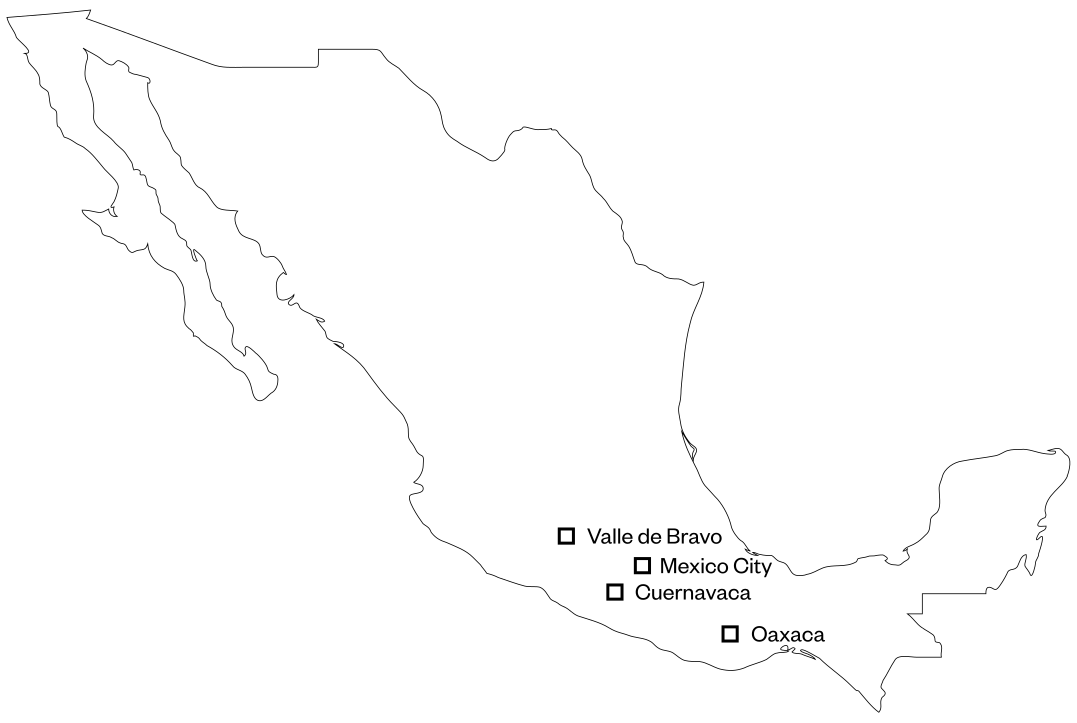
Mexico City embodies this complexity on an urban scale. The metropolis carries a strong historical awareness, yet remains open to innovation. Architecture from the twentieth and twenty-first centuries forms a rich network of ideas and experiments. Outside the capital, places such as Valle de Bravo, Cuernavaca, Oaxaca de Juárez, and Puerto Escondido offer a slower pace, where nature, architecture, and culture reinforce and deepen one another.
On Sunday morning, downtown Mexico City is car-free, an ideal moment to discover the city by bicycle over half a day. We experience sunrise in the chinampas of Xochimilco in a special way by canoe, creating an unforgettable moment in the journey. Thanks to two domestic flights, the program runs smoothly and efficiently, while we explore the center of Oaxaca de Juárez and Punta Pajaros (Puerto Escondido) on foot. For the other transfers, a chartered bus is used, ensuring comfort and flexibility.
highlights
Barragán not only succeeds in weaving together light and shadow, inside and outside, but also teaches us to look at the sky. El aire es azul!
Tadao Ando’s design for the art foundation Casa Wabi, between land and sea, explores the tension between the precision of a Japanese sensibility and the lush excess of a Mexican coastal landscape.
The scarlet-red house of Diego Rivera next to the ultramarine-blue home of Frida Kahlo. As Toyo Ito put it: “A life is captured here in a graphic and abstract design.”
Kalach expands the pre-Hispanic concepts of mass and void in Mexican architecture from spatial experience to material experience. Modesty, refinement, breathing space, illumination, and lightness are achieved through minimal interventions.

Hotel Camino Real, Ricardo Legoretta, Noé Castro, Ramiro Alatorre y Carlos Vargas 1968 © Sigrid Decramer
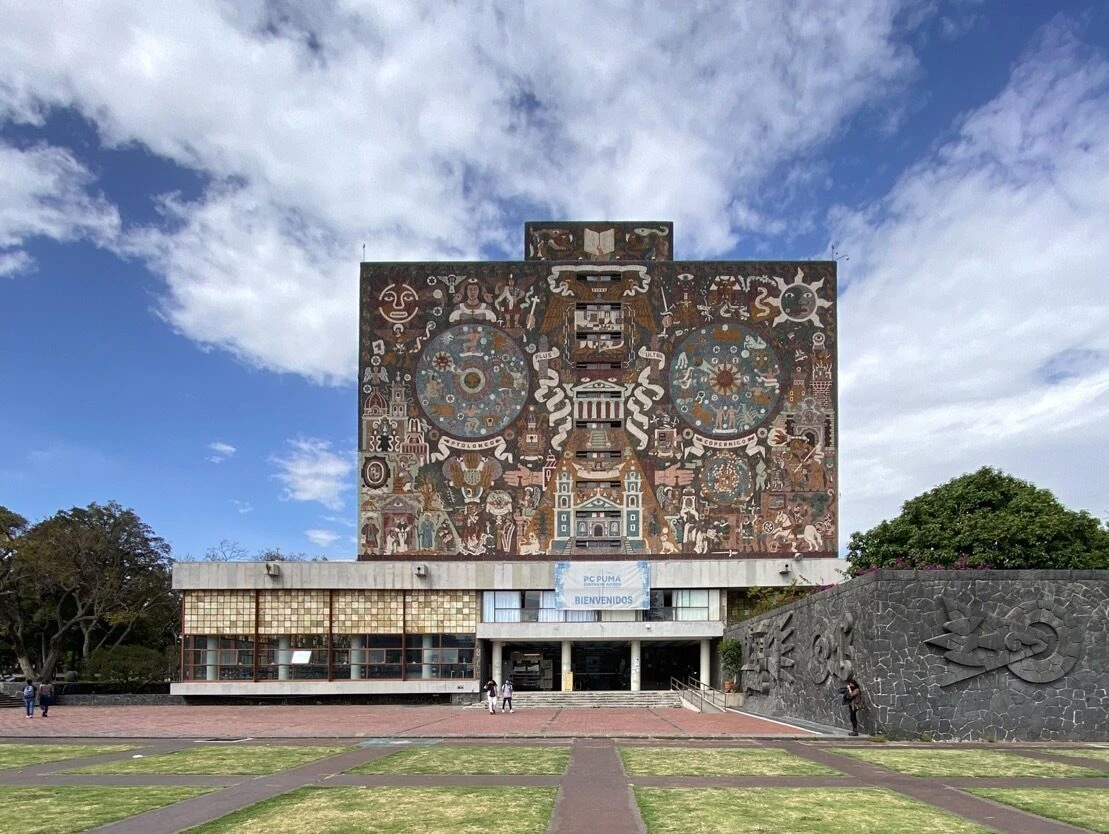
UNAM Biblioteca Central, Diego Rivera, Juan O'Gorman 1950 © Jao Smet

casa Diego Rivera y Frida Kahlo, Juan O'Gorman 1932 © Jao Smet

Casa Wabi, Tadao Ando + BAAQ’ 2016 © Jao Smet
more photos

Casa Diego Rivera, Juan O'Gorman 1932 © Jao Smet
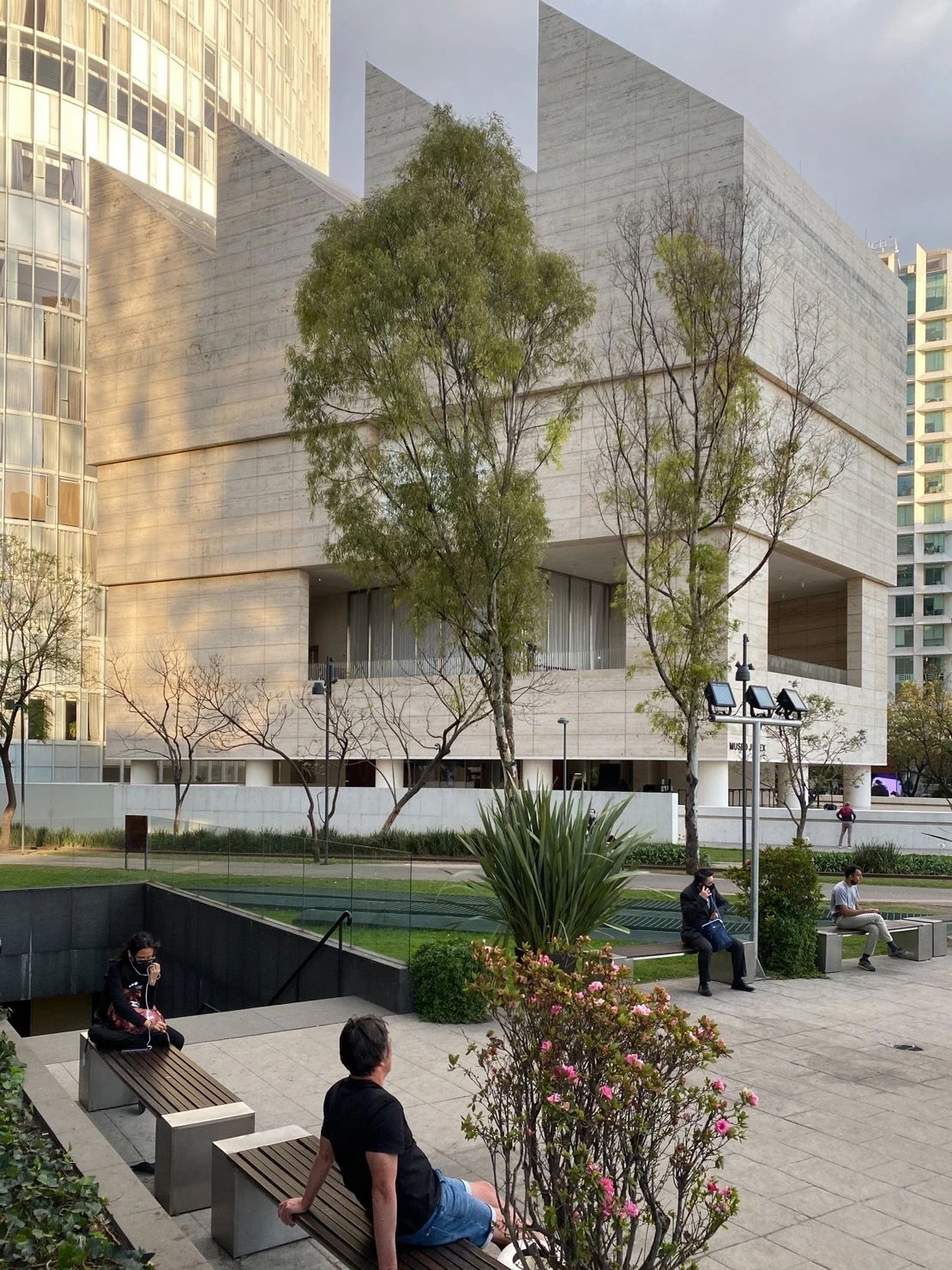
Museo Jumex, David Chipperfield 2013 © Jao Smet
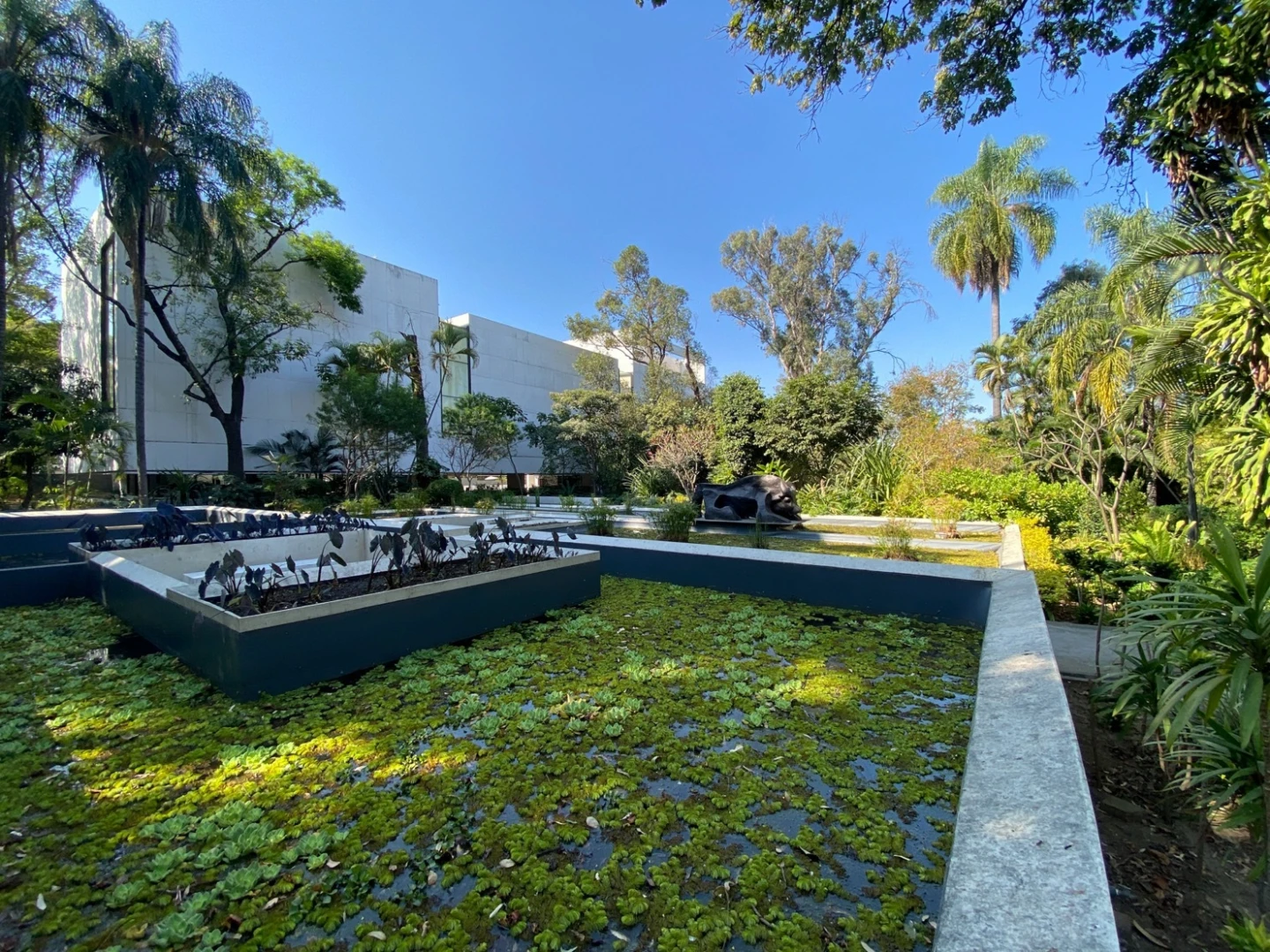
JSA: MMAC Juan Soriano 2018 © Jao Smet

capilla de San Felipe de Jesus, Felix Candela con Guillermo Rosell y Manuel Larrosa 1959 © Jao Smet
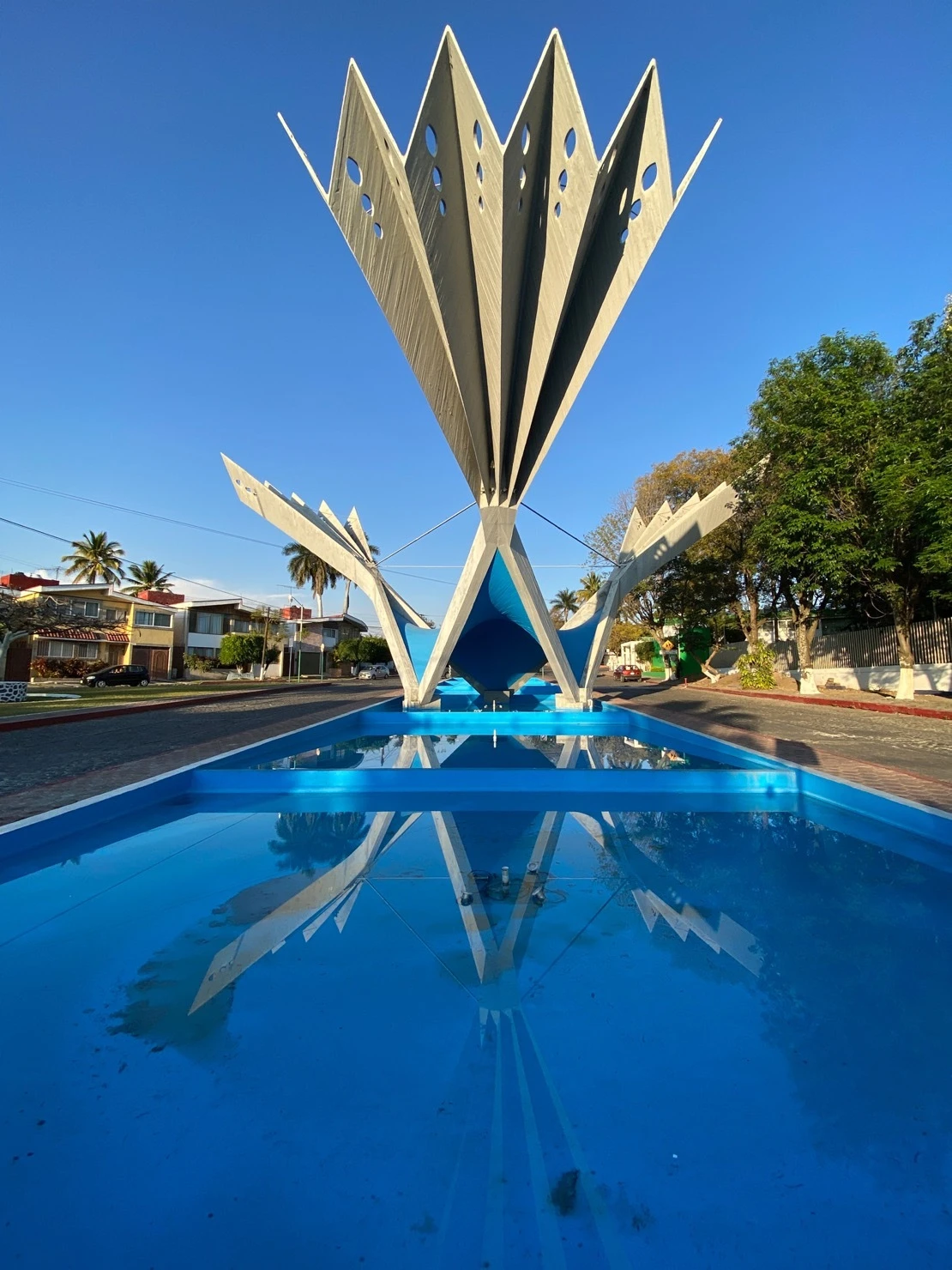
Los Abanicos, Felix Candela 1958 © Jao Smet

centro cultural Teopanzolco, Productora 2017 © Jao Smet

centro cultural Teopanzolco, Productora 2017 © Jao Smet

Luis Barragán, 1953 © Sigrid Decramer

casa Terreno, Fernanda Canales 2018 © Jao Smet
your trip guidance
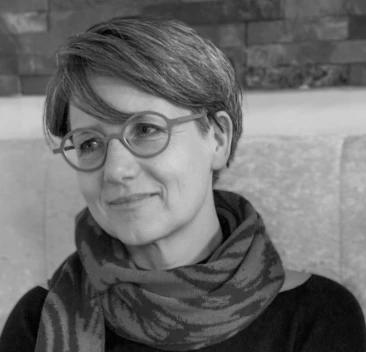
Dominique Pieters
Dominique is the founder and creative director of planopli. She is an architect by training, author, and architecture journalist for (inter)national magazines. Previously, she was artistic director of Archipel and taught at TU Delft and KU Leuven.
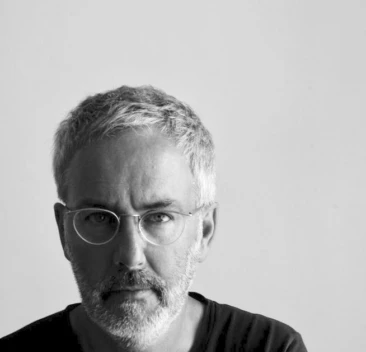
Dirk De Meyer
Dirk is professor emeritus of architectural history at Ghent University. He is co-founder of the Ghent Urban Studies Team and specializes in European architectural history. In addition to his academic career, he is active as an author, curator, and speaker.