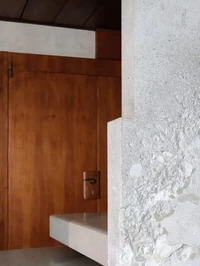
the city as pavilion
VENICE BIENNALE WITH SCARPA


-
type of trip
city trip
-
ideal duration
5 days
-
recommended period
May - November
- schedule a meeting
I have always had an immense desire to belong to a tradition, but without capitals and columns.
Each year, Venice transforms into an exhibition space: alternately for the Art and Architecture Biennales, temporary pavilions and installations nestle among centuries-old facades, monastery courtyards, and quays. The Architecture Biennale confronts contemporary issues and experimental designs with a city that itself has been balancing decay and renewal for centuries. In this way, not only the exhibition, but the city itself becomes the subject of reflection.
Throughout the biennale, the exhibition is accompanied by guides with in-depth knowledge of the field. They provide context for what you see, draw connections between pavilions, and offer a critical perspective on what the biennale does and does not show. Equally valuable are the visits that fall outside the official route: doors that remain closed to an individual traveler, but which open thanks to a network built up over many years during this trip.
Outside the official locations, the dialogue between old and new continues unabated. Carlo Scarpa's Negozio Olivetti, a former Olivetti store on St. Mark's Square, remains a masterful interplay of material, light, and craftsmanship — a quiet counterpoint to the biennale, where spatial precision prevails over grand gestures. The Giorgio Cini Foundation, where historic monastic structure and contemporary restoration come together, and the harmonious, classical architecture of the broader Venetian region also feed that same dialogue between past and present.
Those who look beyond the familiar references discover architecture manifesting itself outside the explicit exhibition context: hidden projects in the urban fabric, and locations scattered across the islands of the lagoon. Together, they create a layered reading experience in which temporary, historical, and contemporary architecture continually reinforce one another.
Travel between locations is mainly by vaporetto. This waterborne network connects the various sites in a natural way and makes the journey itself part of the architectural experience, with constant changes in scale, perspective, and rhythm.
highlights
At Carlo Scarpa's Negozio Olivetti, the boundary between store and exhibition disappears: every step, every shaft of light, is an invitation to look more slowly.
In the Nordic Pavilion, Sverre Fehn lets light fall in as if it were a building material itself. This subtle dialogue between inside and outside translates Scandinavian identity at the biennale.
At the Giorgio Cini Foundation, history and contemporary restoration meet in silence: a serene space where art, architecture, and time lean toward one another.

Padiglione dei Paesi Nordici, Sverre Fehn 1962 © Dominique Pieters
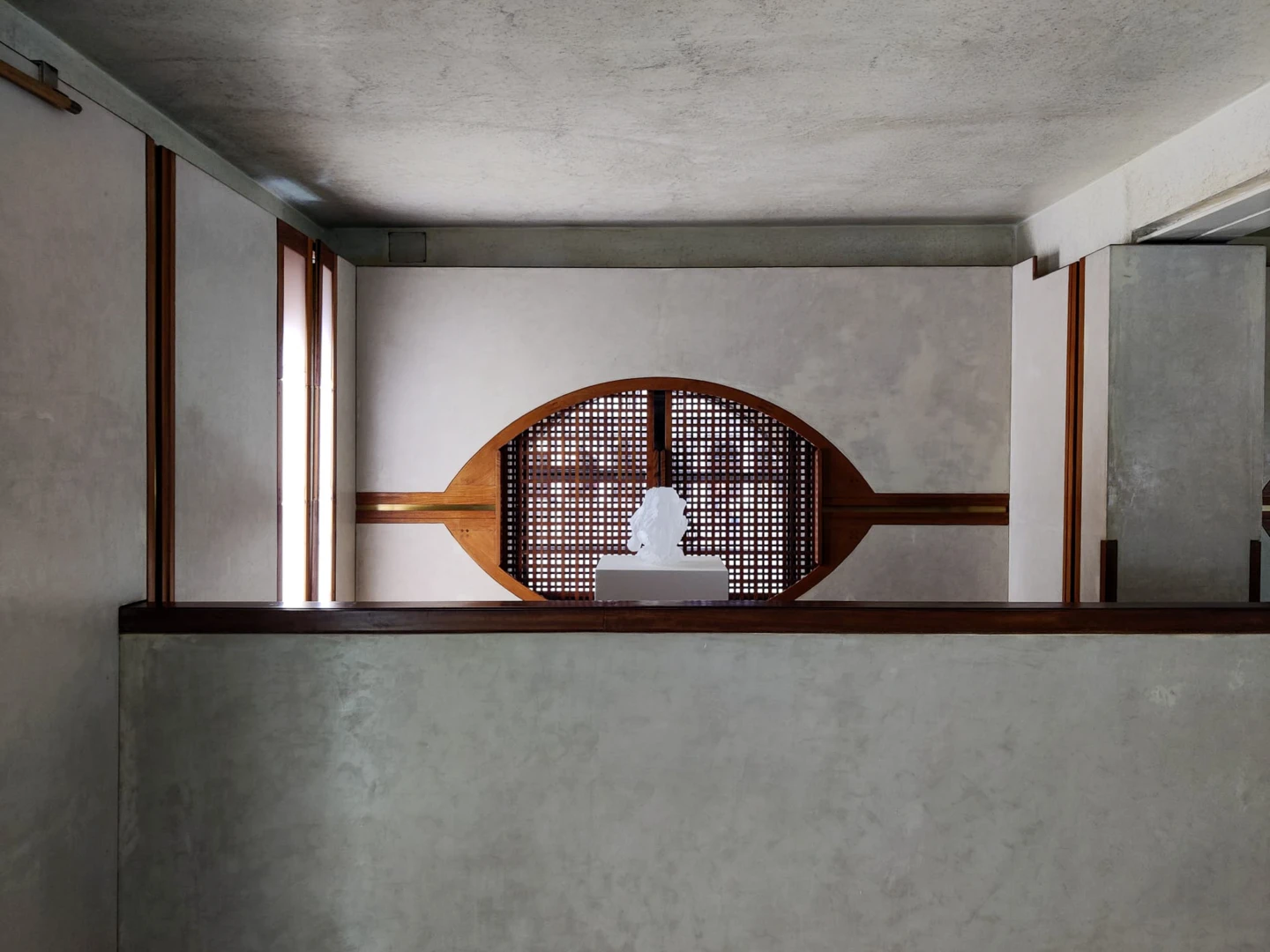
Negozio Olivetti, Carlo Scarpa 1958 © Loes Decruynaere

Fondazione Querini Stampalia, Carlo Scarpa 1963 © Dominique Pieters

La Biglietteria per L'ingresso ai Giardini della Biennale di Venezia, Carlo Scarpa 1952 © Dominique Pieters
more photos

Il Giardino delle Sculture per la Biennale di Venezia, Carlo Scarpa 1952 © Dominique Pieters

Padiglione della Finlandia, Alvar Aalto 1939 © Dominique Pieters

Padiglione dei Paesi Nordici, Sverre Fehn 1962 © Dominique Pieters
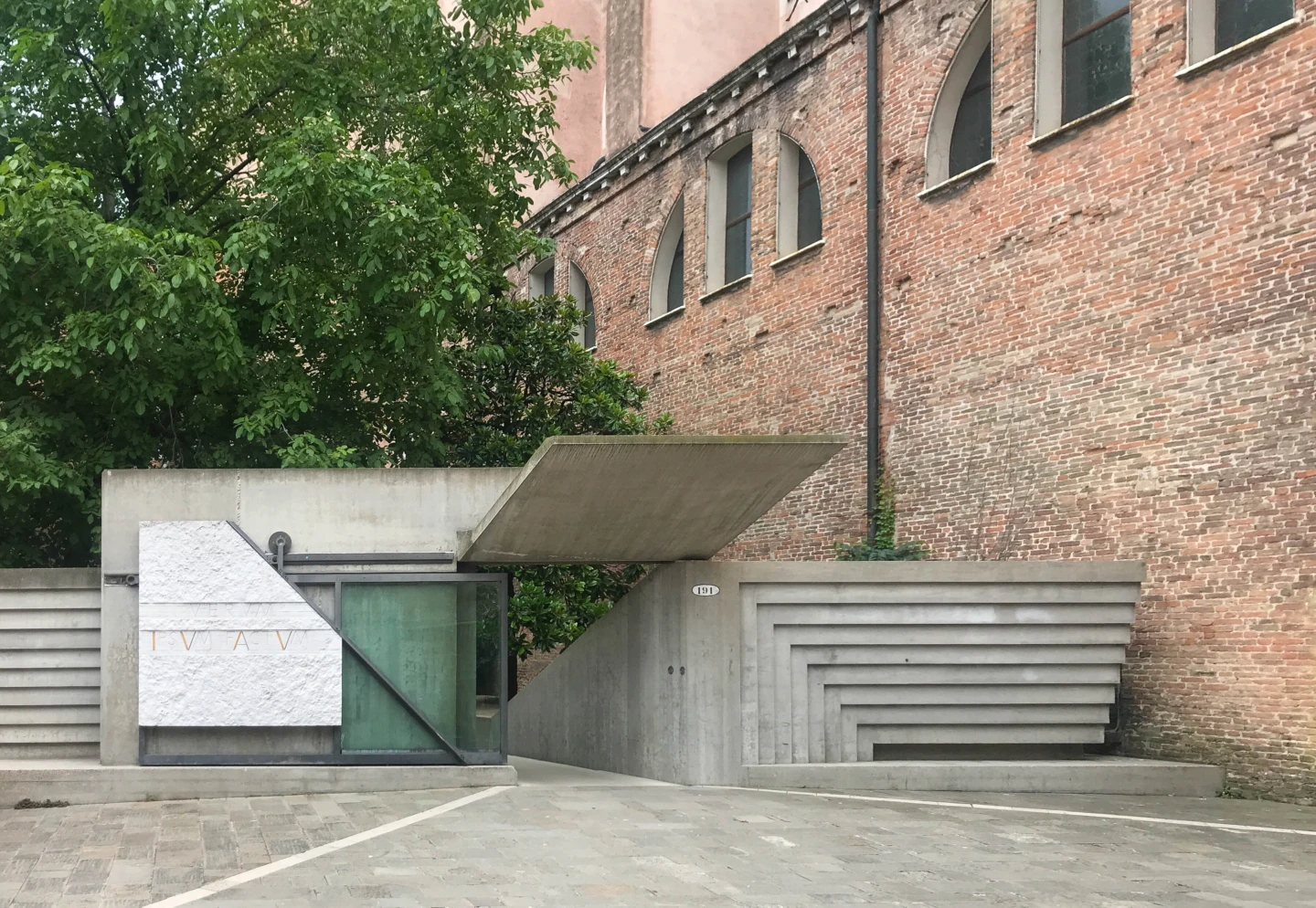
Ingresso della Facoltà di Architettura IUAV, Carlo Scarpa 1985 © Dominique Pieters
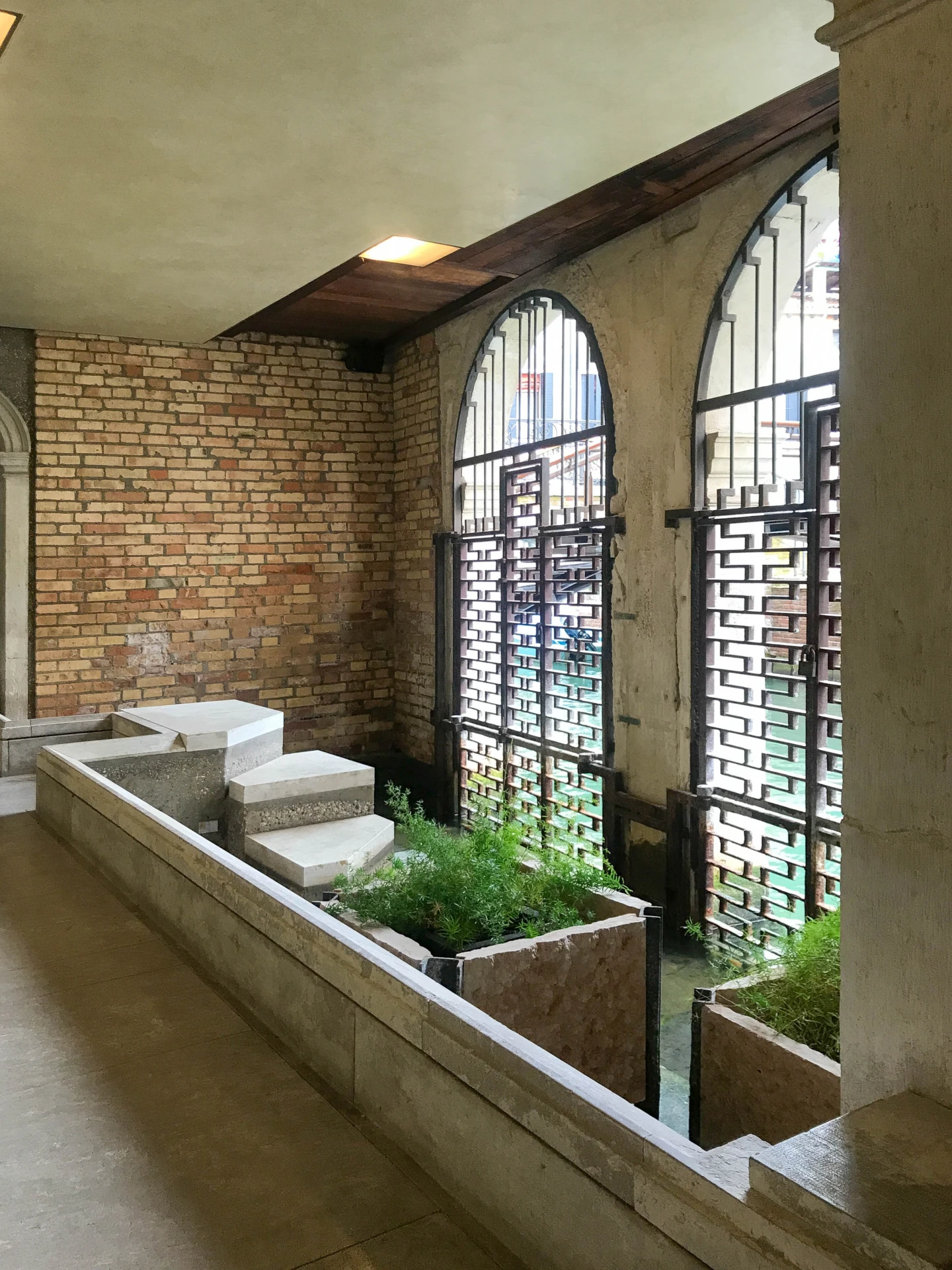
Fondazione Querini Stampalia, Carlo Scarpa 1963 © Dominique Pieters
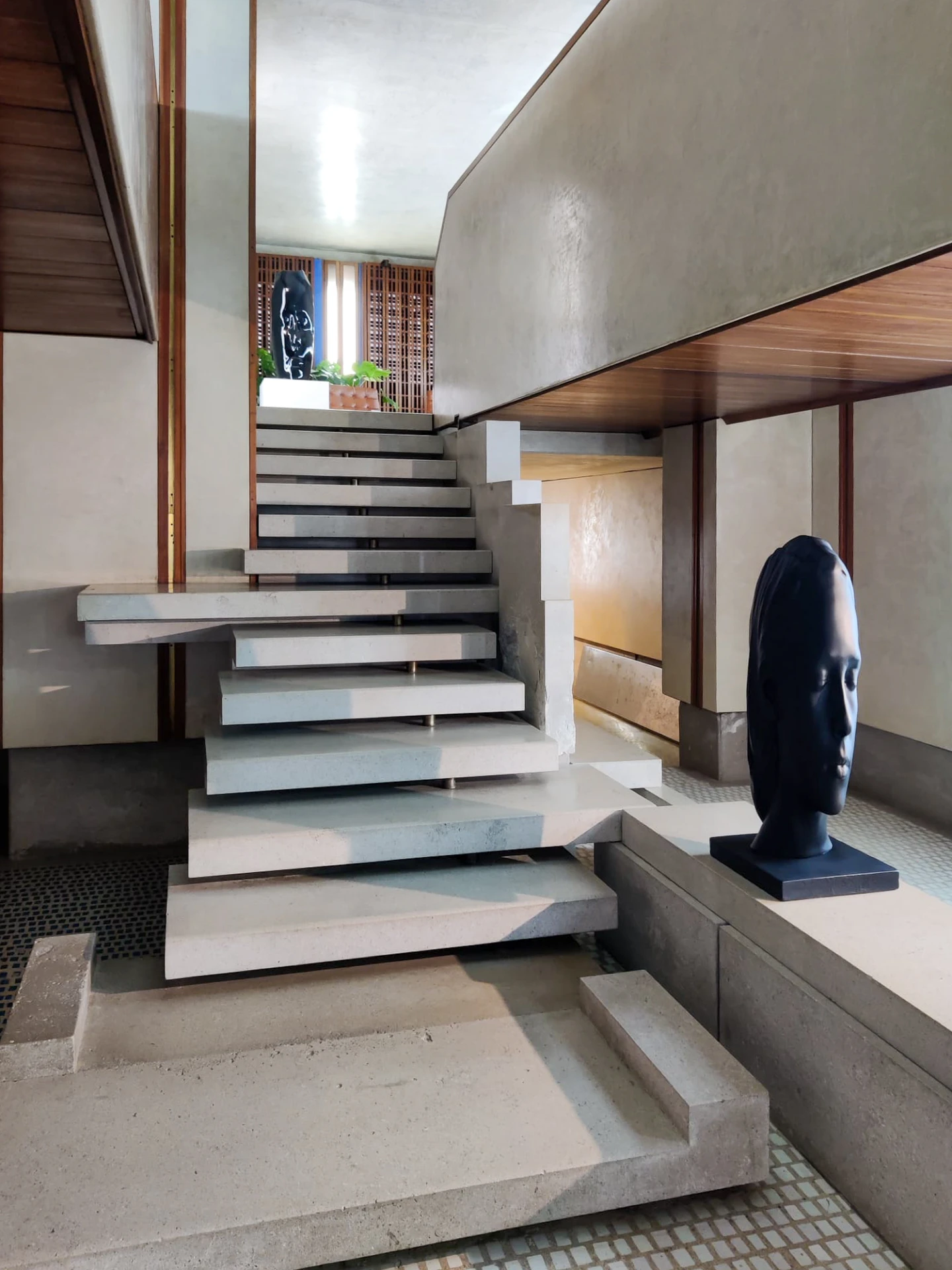
Negozio Olivetti, Carlo Scarpa 1958 © Loes Decruynaere
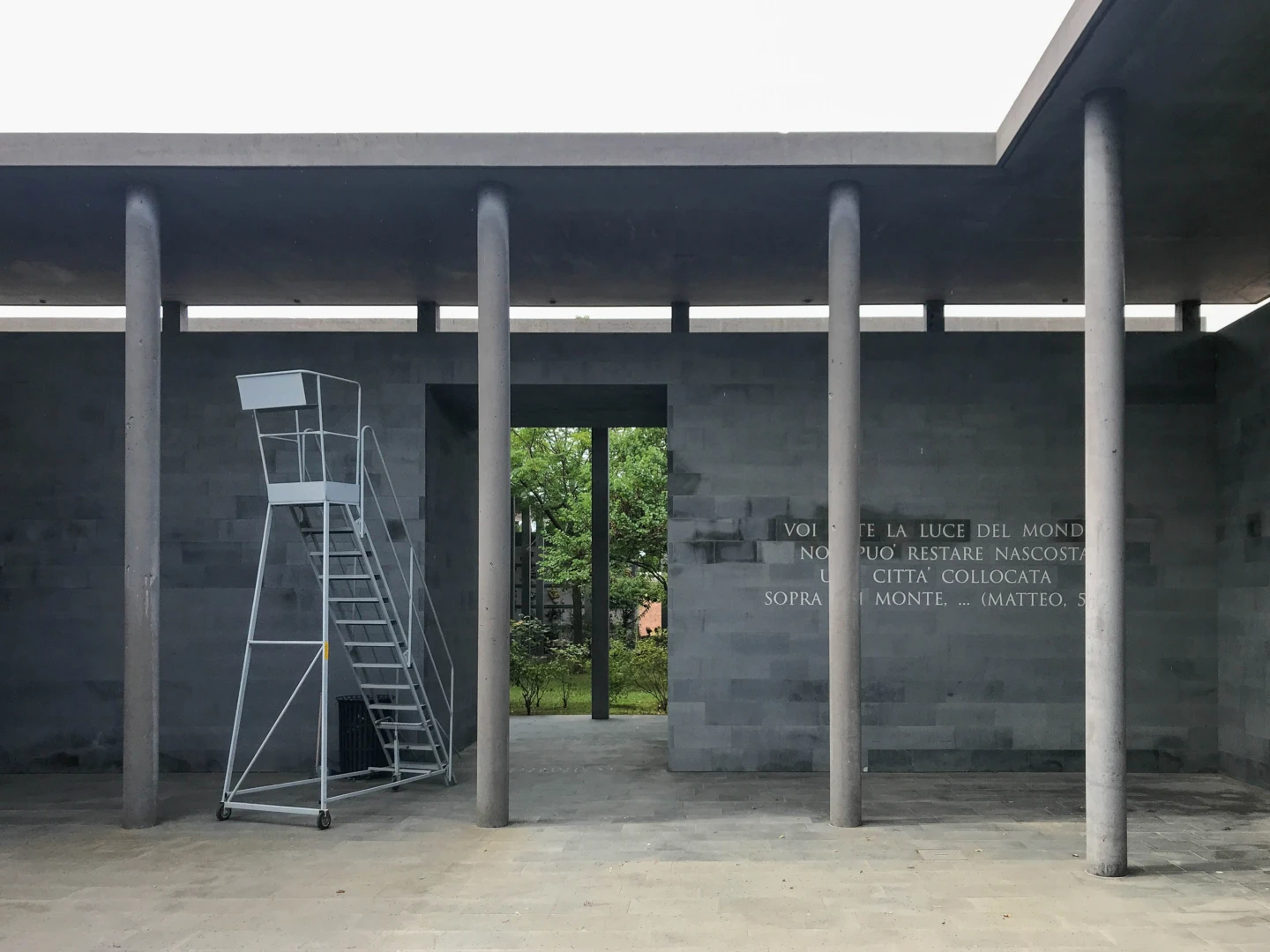
Cimitero San Michele, David Chipperfield 2018 © Dominique Pieters

your travel curators

Loes Decruynaere
Loes worked as an architect at several renowned firms in Belgium. She was curator of the exhibition and the accompanying book about the work of the young, deceased artist Henri B Defauw. She is also part of the cooperative bookstore Rokko.
Dominique Pieters
Dominique is the founder and creative director of planopli. She is an architect by training, author, and architecture journalist for (inter)national magazines. Previously, she was artistic director of Archipel and taught at TU Delft and KU Leuven.