a lecture in layers
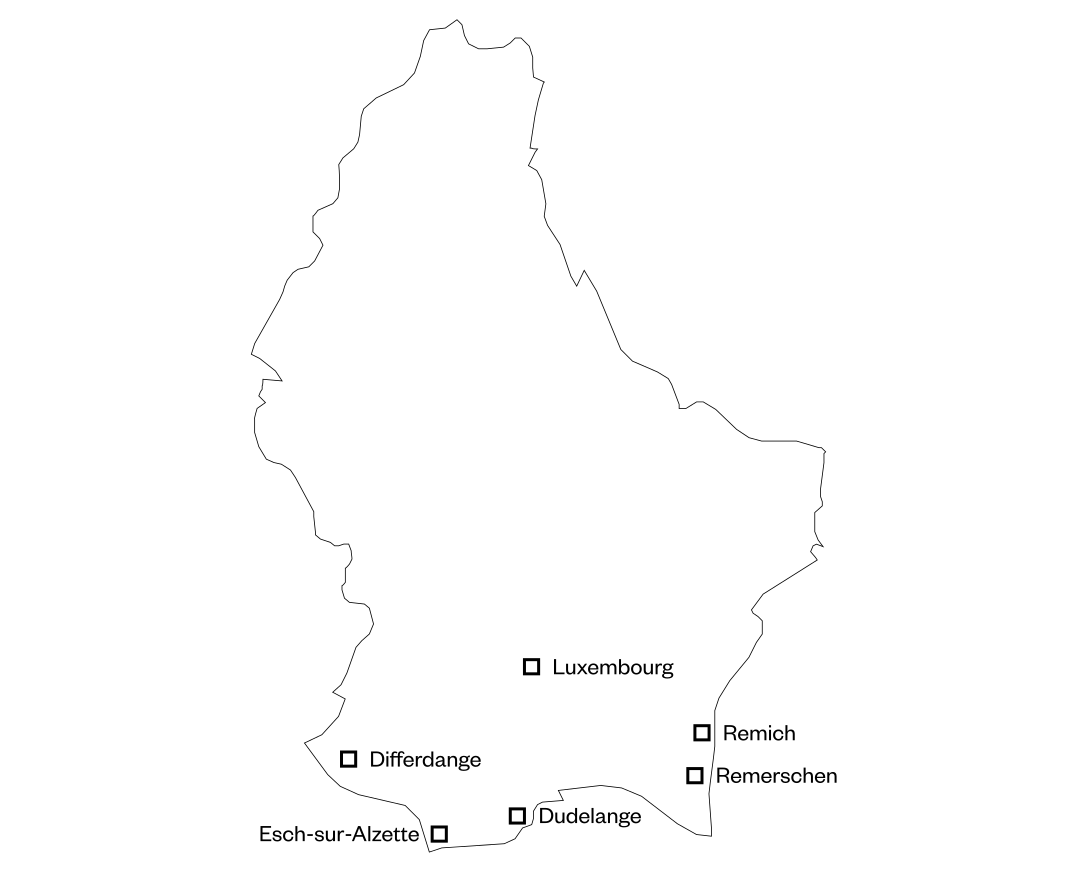
SOUTHERN LUXEMBOURG

-
travel dates
24.06 — 27.06.2027
-
price
from € 2.300
-
sign up
until 01.03.2027
- reserve your place
Every project leaves a trace, a lesson, or even a scar.
Luxembourg reinvents itself with every generation, and architecture follows suit. In a century and a half it went from fortified city to steel nation, from steel nation to European capital, and today it is repurposing its own industrial past. Every step left traces in the landscape, and every generation builds on what the previous one left behind. In this way, the whole country becomes one great architectural laboratory.
Every Belgian has an image of Luxembourg: European institutions, banks, a fuel stop on the way south. Anyone walking around with the architects who live and work there discovers a different, surprising country. Luxembourg is smaller than our own province of Luxembourg, and yet in just a few days you see an unusually broad range: a capital city on and in the rock, a European quarter on a plateau, a mining region where blast furnaces stand among lecture halls, and a wine valley with its own signature. The country is prosperous and deliberately invests in public architecture and in its heritage.
In the capital, the Alzette and the Pétrusse cut deeply into the rocky plateau. Because of these changes in elevation, the city has been building in layers for centuries: fortifications, casemates, bridges and lifts connecting the upper and lower city. Sala Makumbundu from CBA Architectes shows us how far this goes: in the Musée National d'Histoire et d'Art, the underground levels are visible in the rock itself.
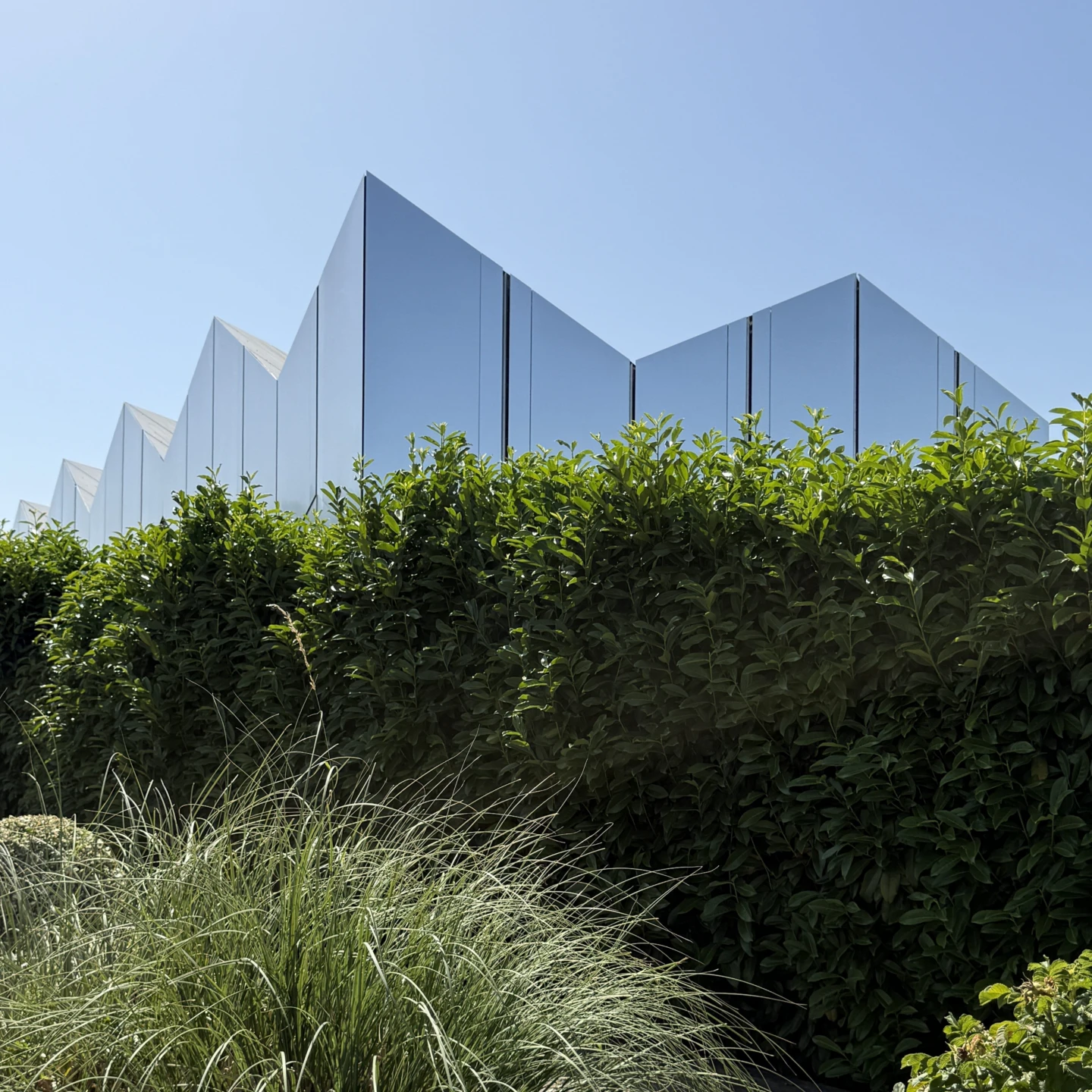
In the south lies a landscape that was largely made by people. With the arrival of the railway in 1859 and the extraction of iron ore from the Minette, Luxembourg became a steel power from 1870 onwards. When the steel industry went into crisis in the 1970s, the country consciously and deliberately chose reconversion. In Differdange, a factory became the creative hub 1535°, named after the melting point of iron. Luxembourg deliberately demolishes little and commemorates much. That reflex is also a response to a country under pressure.
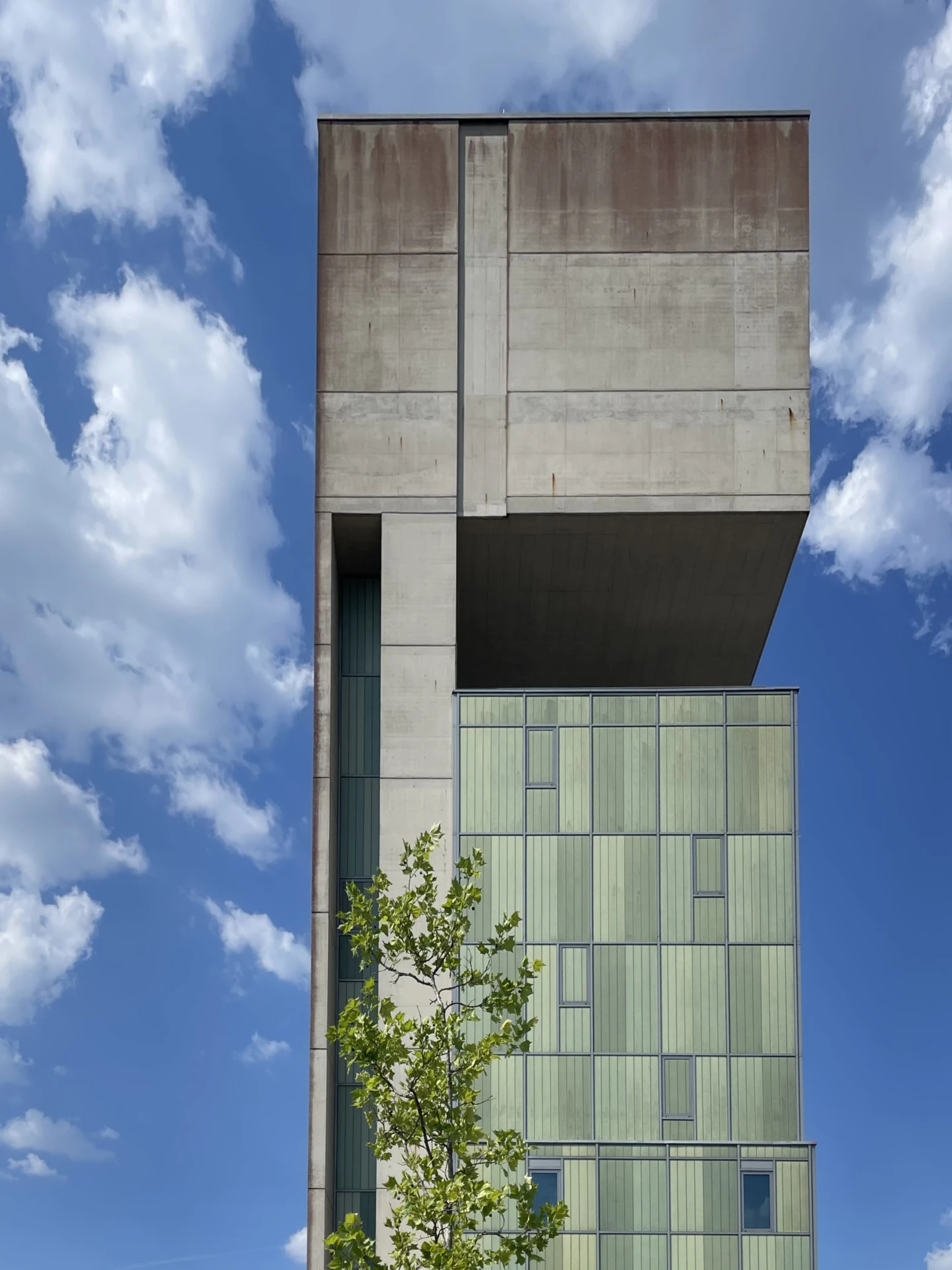
The population is growing rapidly and housing has become unaffordable for many. Property developers mainly build small owner-occupied apartments, and an affordable rental market is only slowly emerging. A young generation of architects is critically seeking alternatives. Philippe Nathan from the firm 2001 spoke candidly to us about how that pressure is changing the landscape, and the architecture centre LUCA is also making affordable housing a priority. Population growth is also increasing demand for drinking water, and even that is being turned into an architectural opportunity by municipalities. New districts receive their own water tower, often through an architecture competition. The result is a collection of contemporary landmarks.
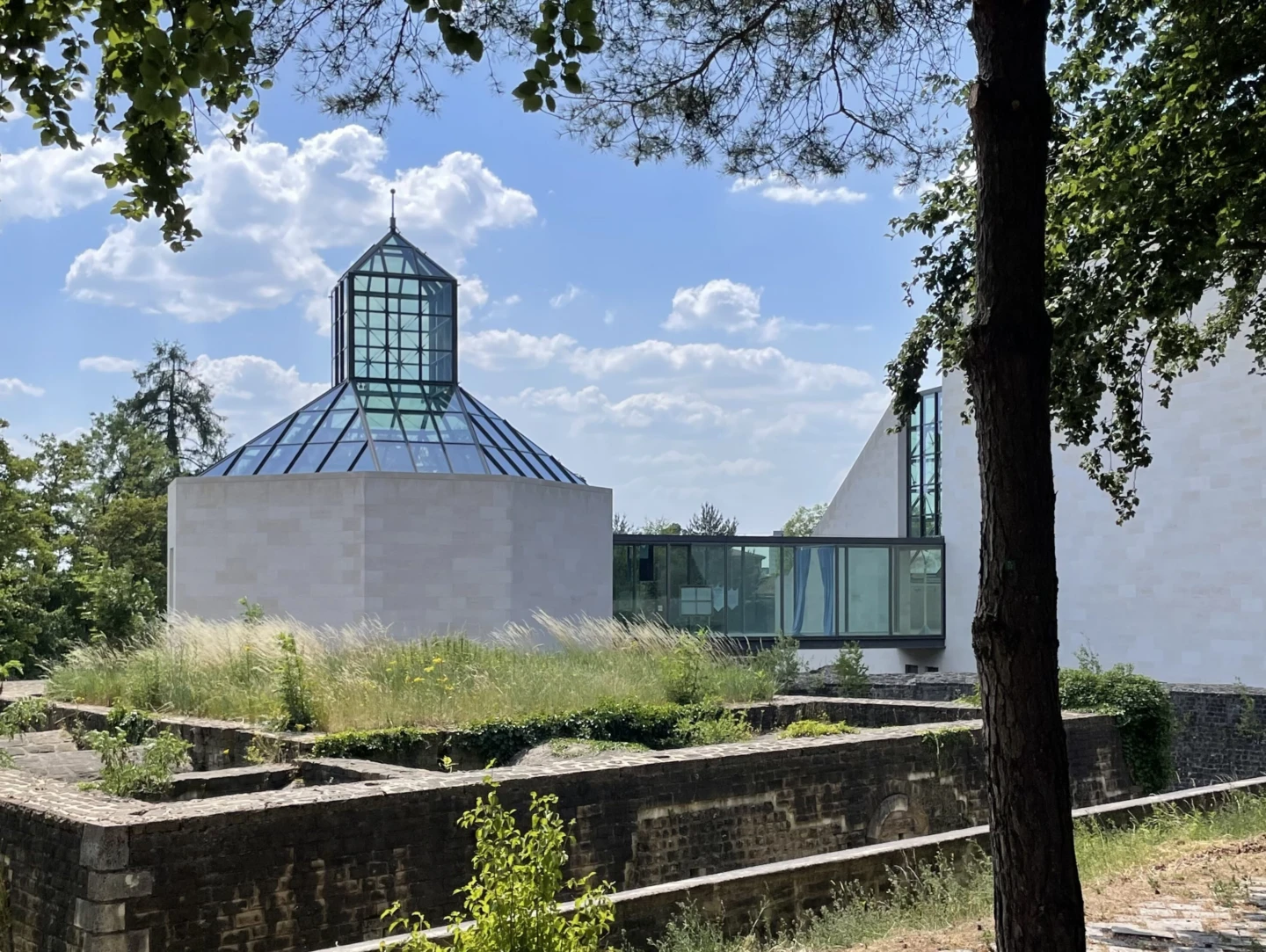
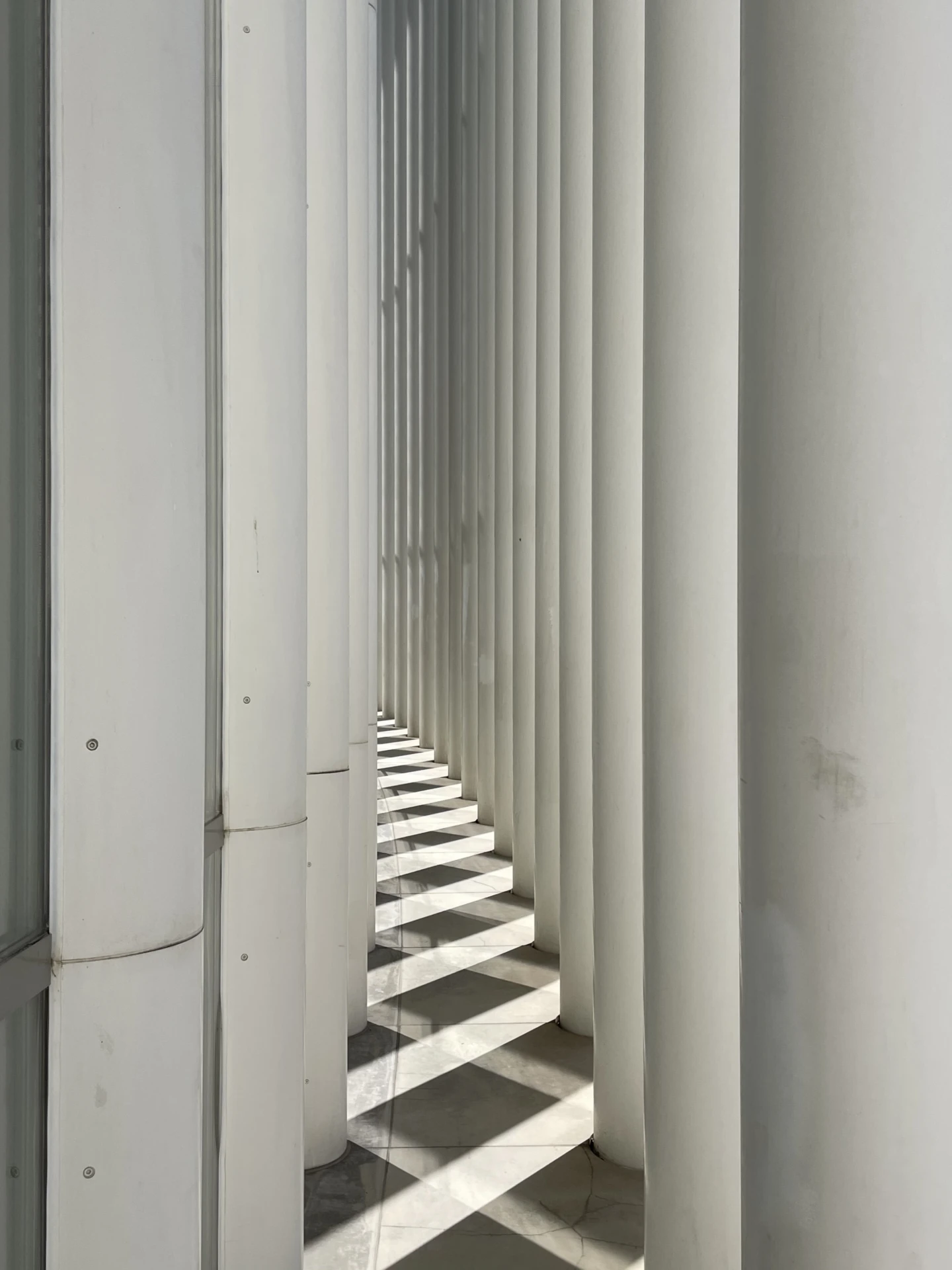
On the Kirchberg plateau, a completely new district has been growing since the 1960s: a small Paris with its own La Défense. Here, international names designed the European capital: I.M. Pei the Mudam, Christian de Portzamparc the Philharmonie and Dominique Perrault the extension of the Court of Justice, with its golden towers. Alongside these imported icons, a strong local scene is emerging.
In the east, the Moselle valley opens up a more gastronomic Luxembourg. Winegrowers and architects work together there on a landscape in which architecture and wine meet. From Remerschen, François Valentiny has left his mark on the entire region.
Some highlights
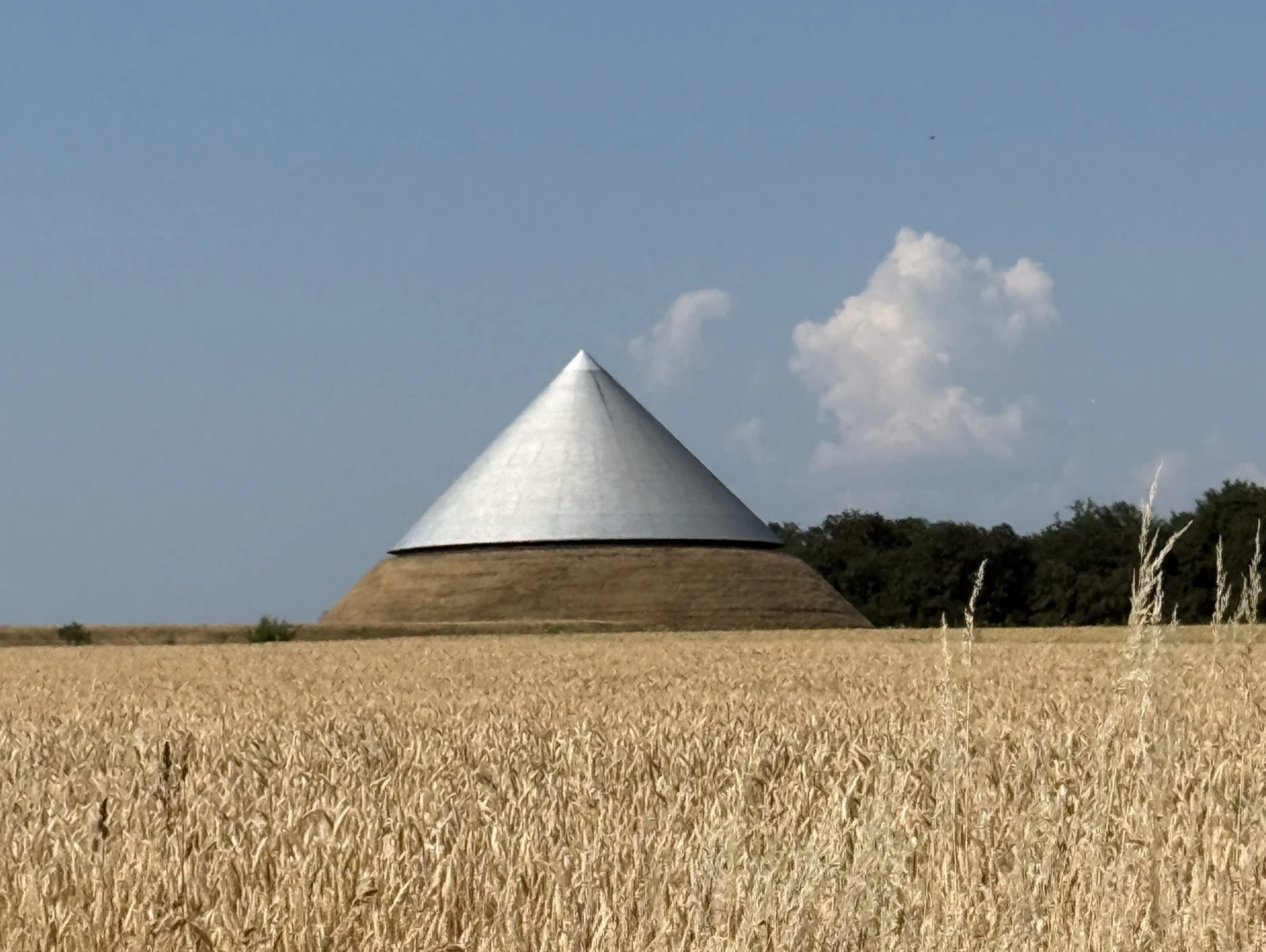
- Rebierg water tower. In the middle of the fields near Hivange, a shining cone rises up. Architect Georges Reuter turned the classic water-tower model on its head: where most widen at the top, Rebierg stands firmly on a broad base and narrows to a point towards the sky. What you see, however, is only the tip of the iceberg: underground lies a reservoir holding seven times more water than the tower itself.
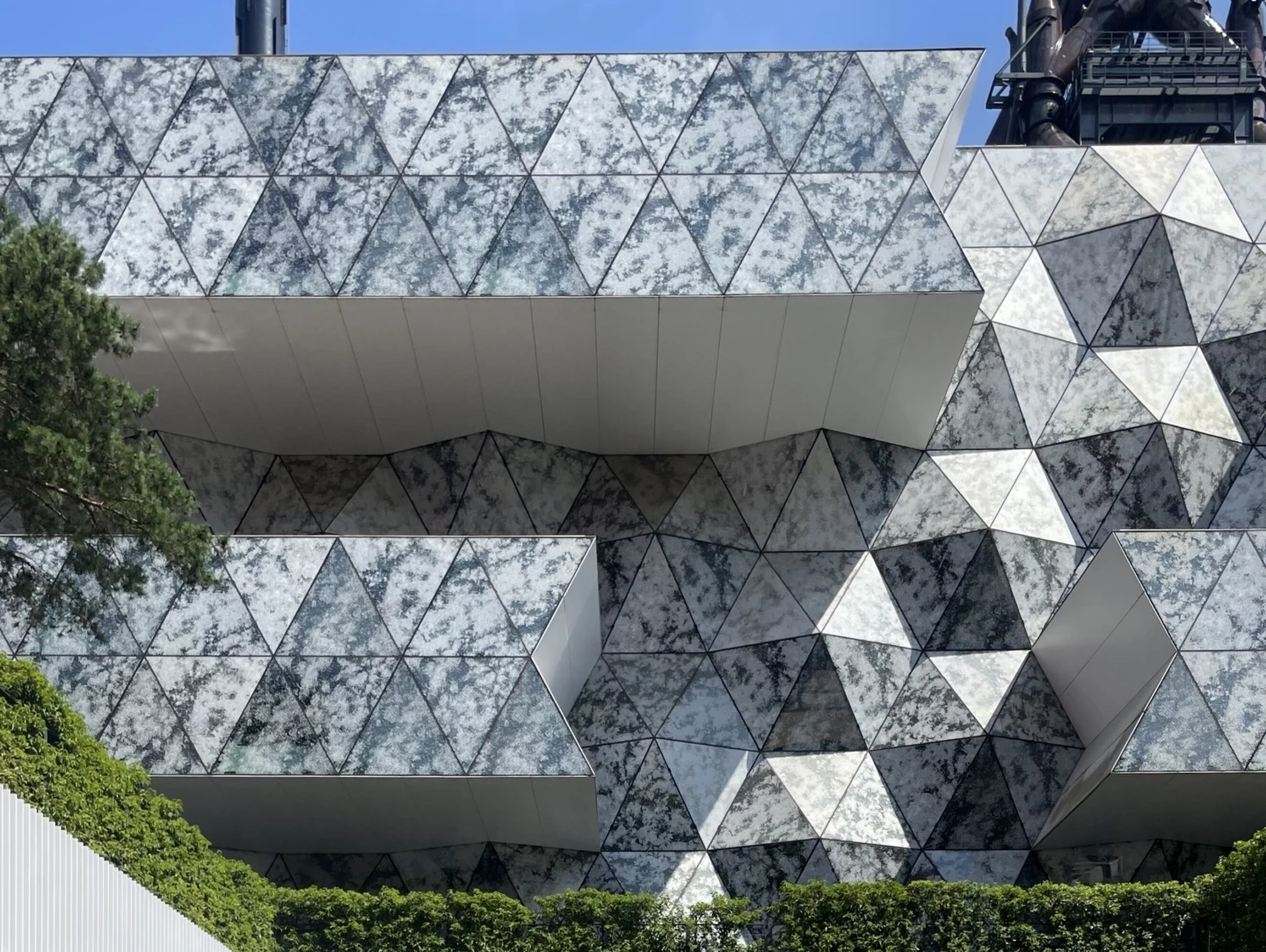
- The Belval campus. On the former steel site of Esch-Belval, the blast furnaces still stand among the university buildings, including the Maison du Savoir and the Luxembourg Learning Centre. Architect and critic Alain Linster guides us here.
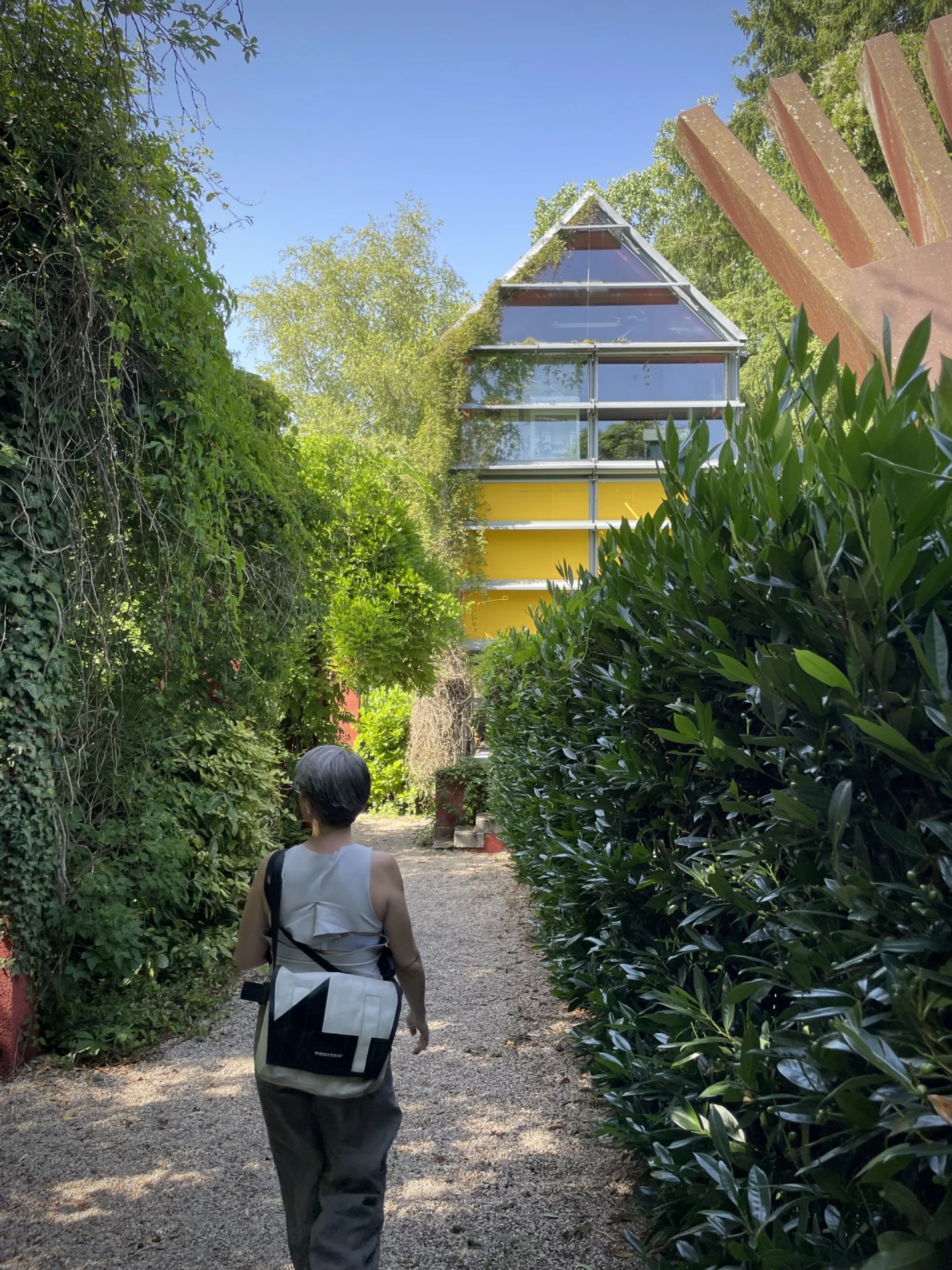
- Valentiny Foundation. In Remerschen, the foundation of François Valentiny preserves the memory of his office: paintings, sculptures, plans and models from more than forty years of work. Anyone who walks around here will later recognise his handwriting everywhere in the Moselle region.
This makes the trip a cross-section of the country. Over a few days we cut through rock, plateau, mining basin and wine valley, where landscape, history and architecture are stacked on top of one another. The architects who build their country with passion and perseverance help us read those layers.
© Mira De Cleen
© Dominique Pieters
© Mira De Cleen
more photos
© Mira De Cleen
© Mira De Cleen
© Mira De Cleen
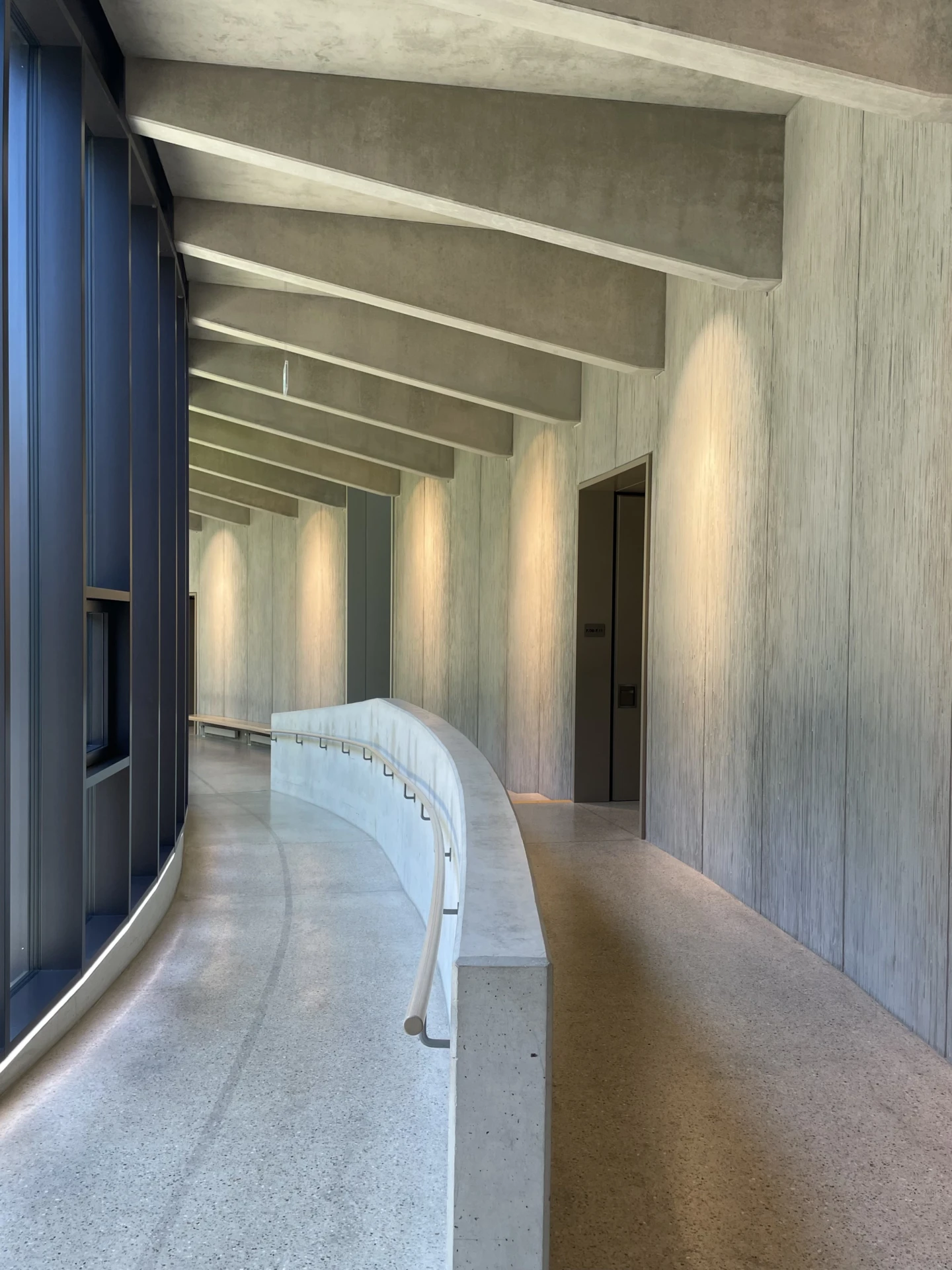
© Mira De Cleen
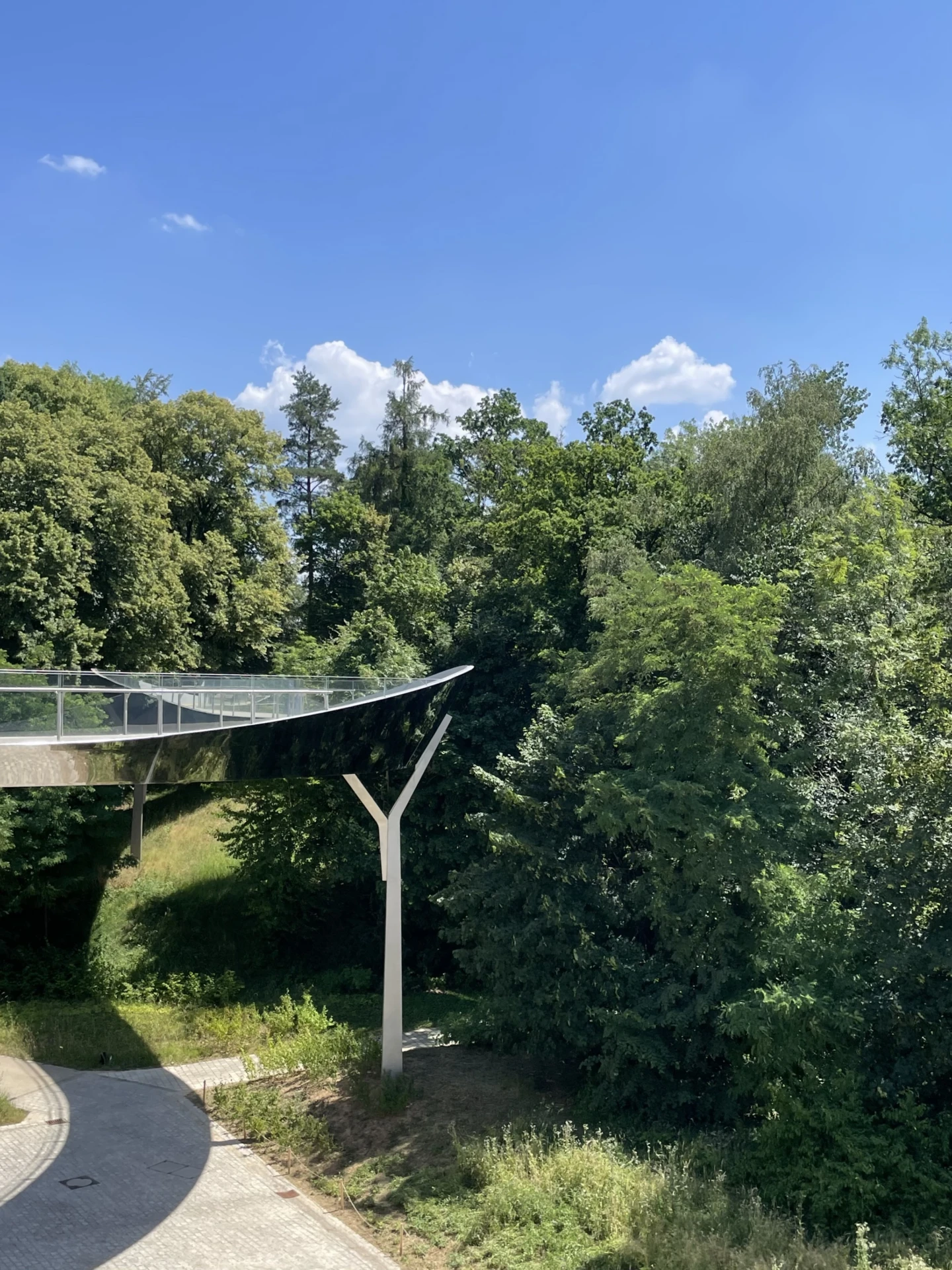
© Mira De Cleen
your trip guidance
Mira De Cleen
Mira combines curating architecture trips at planopli with her work as an architect in Antwerp. Driven by a strong interest in space, visual culture and film, she volunteers at two arthouse cinemas, where architecture and cinematography meet.
Dominique Pieters
Dominique is the founder and creative director of planopli. She is an architect by training, author, and architecture journalist for (inter)national magazines. Previously, she was artistic director of Archipel and taught at TU Delft and KU Leuven.