Brutalism in Brazil
geschreven door Dominique Pieters | 18 May 2026
The brutalist movement gave form to a mood that was widespread among young architects in the 1950s (through the 1970s). The term ‘brutalism’ comes from Guy Oddie, a family friend of the Smithsons who nicknamed Peter Brutus, thereby giving rise to the term New Brutalism. Other sources instead find an origin in Le Corbusier’s famous formula for the Cité Radieuse de Marseille: ‘béton brut’...
The premise of brutalism was a sense of stagnation, attributable on the one hand to the problems in the construction market immediately after the war, and on the other to the refinement with which the established older generation, always willing to compromise, attracted building commissions to itself. The building style of these older architects was called New Humanism by the political left and New Empirism by the right. New Brutalism was intended as parody, but it also drew attention to a number of characteristics of the architecture of the Smithsons and their circle. Their standard was the uncompromising architecture of Ludwig Mies van der Rohe and Le Corbusier, characterized by intellectual clarity and an honest treatment of construction and material. Moreover, they recognized in the work of these masters a tradition that rose above style and fashion.
Soon the puritan extremism of the early English brutalism became intertwined with an international movement that at most pursued the same goal from a distance. From then on, brutalism’s uncompromising nakedness of material went hand in hand with the same attitude toward form. Visible symmetry now gave way to a ruthless honesty of the functional zones and their interrelationship. Even the easily applicable geometry of rationalism was abandoned in favor of a new compositional principle, based on the topography of the site and the topology of internal circulation. Examples of brutalist architecture can be found in several countries and regions at the same time. Although they are visually and technically connected, they possess specific characteristics of local influences and cultural references. Studies suggest not a hierarchical but a complex and varied panorama, aptly described by Rayner Banham as an “international brutalist connection”.
In Brazil, the term brutalism began at the same time as, and not after, the competition and construction of Brasilia, although the heterogeneous tendency only became known throughout the country in the 1960s with outsiders such as Lina Bo Bardi, but also with the Paulista school and thus architects such as Vilanova Artigas and Paulo Mendes da Rocha. After a quarter century of quiet, the brutalist architecture of the Paulistas is once again in the spotlight thanks to its avant-garde quality and artistic value. Its place in the international architectural field is being reconsidered, and many buildings have meanwhile already become part of modern heritage.
Pritzker Prize winner (2006) Mendes da Rocha is often called the “Brazilian brutalist” because his buildings consist of prefabricated concrete elements. Heavy and angular, his brutalist buildings are quick and inexpensive to erect. Common features are naked and unfinished concrete surfaces that emphasize the scars of the wooden formwork, supplemented by exposed masonry, steel beams left in view, and massive, sculptural forms. For Mendes da Rocha, brutalism did not mean attachment to style, but guidance according to resolute design principles: “Architecture is a human endeavor inspired by the nature all around us. We must transform nature; fuse science, art and technology into a sublime statement of human dignity.”
Sources
Vittorio Magnago Lampugnani, Lexicon of Twentieth-Century Architecture, publisher SUN, Amsterdam, 2006, ISBN 90-5875-114-7, pp. 72-73.
Albin Michel, Dictionary of Architects, publisher Encyclopaedia Universalis, Paris, 1999, ISBN 2-226-10952-8, pp. 147-149.
www.arquiteturabrutalista.com.br
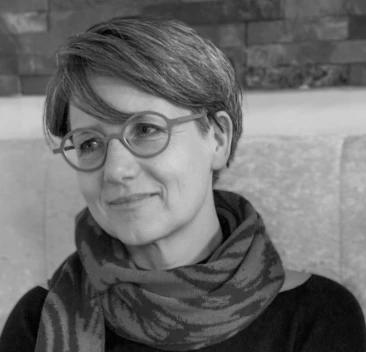
written by
Dominique Pieters
Dominique is the founder and creative director of planopli. She is an architect by training, author, and architecture journalist for (inter)national magazines. Previously, she was artistic director of Archipel and taught at TU Delft and KU Leuven.