Curating the Gulf States: My Journey as a planopli Intern.
geschreven door Mena Alazzawi | 18 May 2026
My internship at Planopli began with an ambitious challenge: helping shape and curate an architectural journey through the Gulf States. From the emerging cultural scene in Saudi Arabia and the tactile heritage interventions in Bahrain, to the bold, climatic campuses in Qatar and the Emirates. It was a search for the balance between age-old traditions and a radical form of modernism.
During this process, I was confronted with the persistent clichés surrounding the region. In common imagery, the Gulf States are often reduced to two extremes: the glittering extravagance of new skyscrapers or a nostalgic, almost orientalist image of the desert. The reality I was able to curate, however, is far more layered, intellectual, and deeply rooted.
To make this nuance tangible, I highlight below several key projects that, for me, embody the essence of this architectural transformation: projects where history is not erased, but translated into a new, challenging formal language.
Saudi Arabia: The Desert Dialogue
In Saudi Arabia, the cultural revival is felt nowhere more strongly than in AlUla. It is the place where art, architecture, and the ancient desert landscape merge into one.
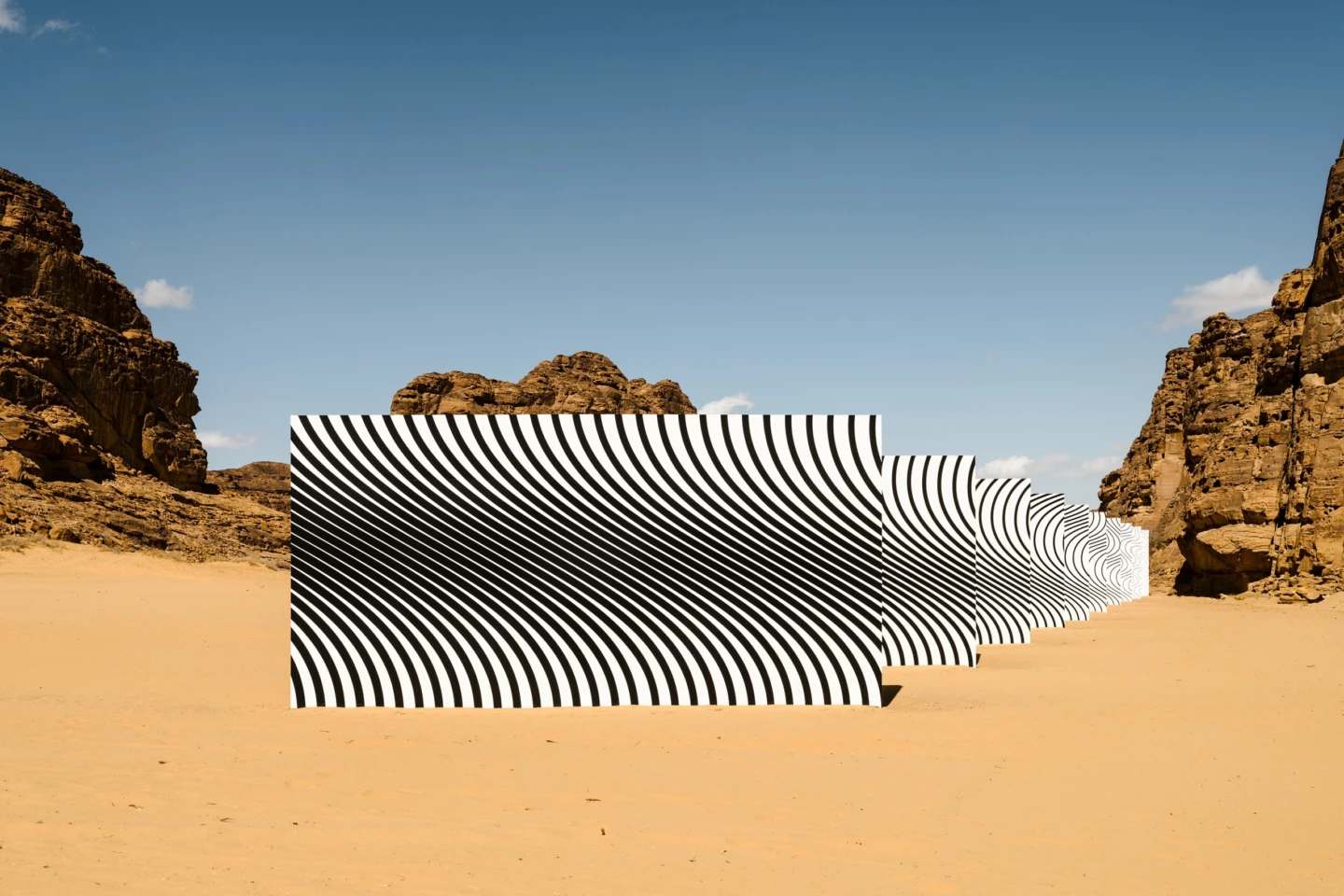
In the emptiness of the desert, silence is never truly silent; it is an ancient language of wind and sand. Where Arabic poetry once sang the contours of the landscape, contemporary architecture in AlUla now takes over that pen. Here, in the shadow of the sandstone rocks, art and architecture flow together in a new dialogue with the desert.
Desert X AlUla is not an exhibition, but a hushed conversation between the human hand and the untamed horizon.
Bahrain: Textures of Time
Bahrain calls for a different pace. Here, the Pearl Route takes center stage: a finely woven trail through the streets of Muharraq where time is measured not in years, but in textures. It is a landscape of refined, contemporary interventions that nestle like precious sediment between the old walls.
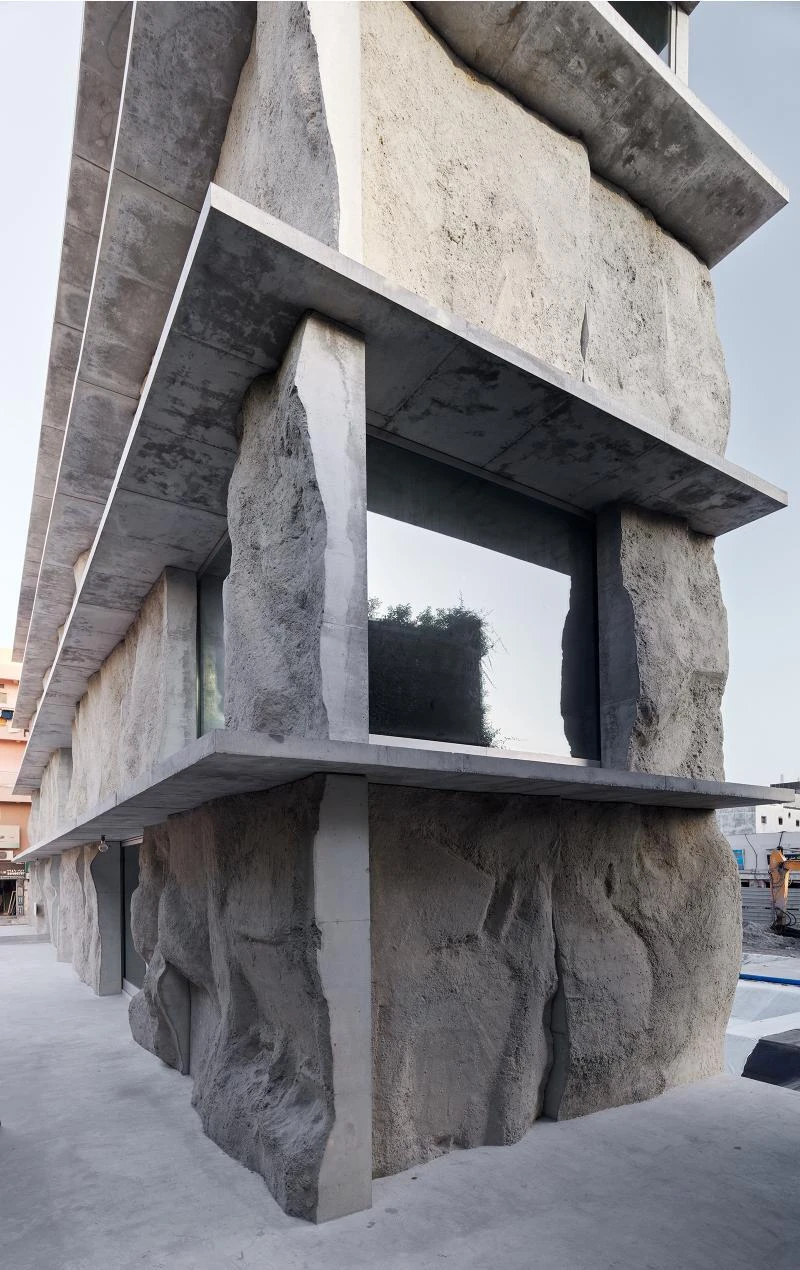
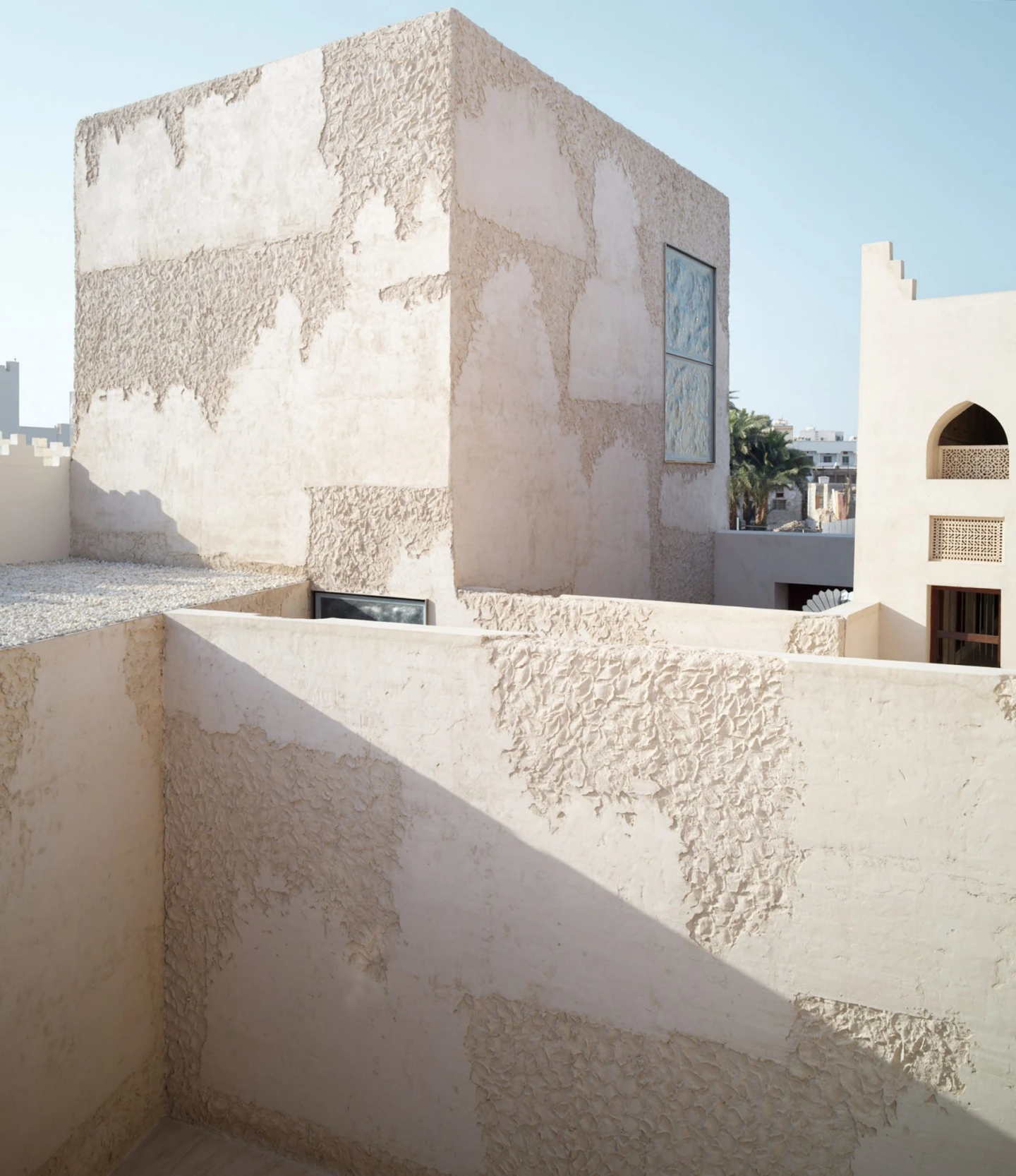
In the work of Anne Holtrop this experience becomes tangible. His designs possess the abstract sharpness of the 21st century, yet at the same time seem to emerge from a primordial slowness. The Siyadi Pearl Museum folds itself like a massive volume between the historic buildings, finished with a layered, rough lime plaster. It is architecture that does not imitate the island’s craft memory, but reinterprets it abstractly in the streetscape.
Qatar: Climatic Logic
In Qatar, we find a powerful rebuttal to fleeting glass architecture: the Qatar University by Kamal El Kafrawi. This design from the 1970s is not a collection of separate buildings, but an intelligent, modular system of octagonal volumes that lie like a labyrinthine fabric on the edge of a wadi.
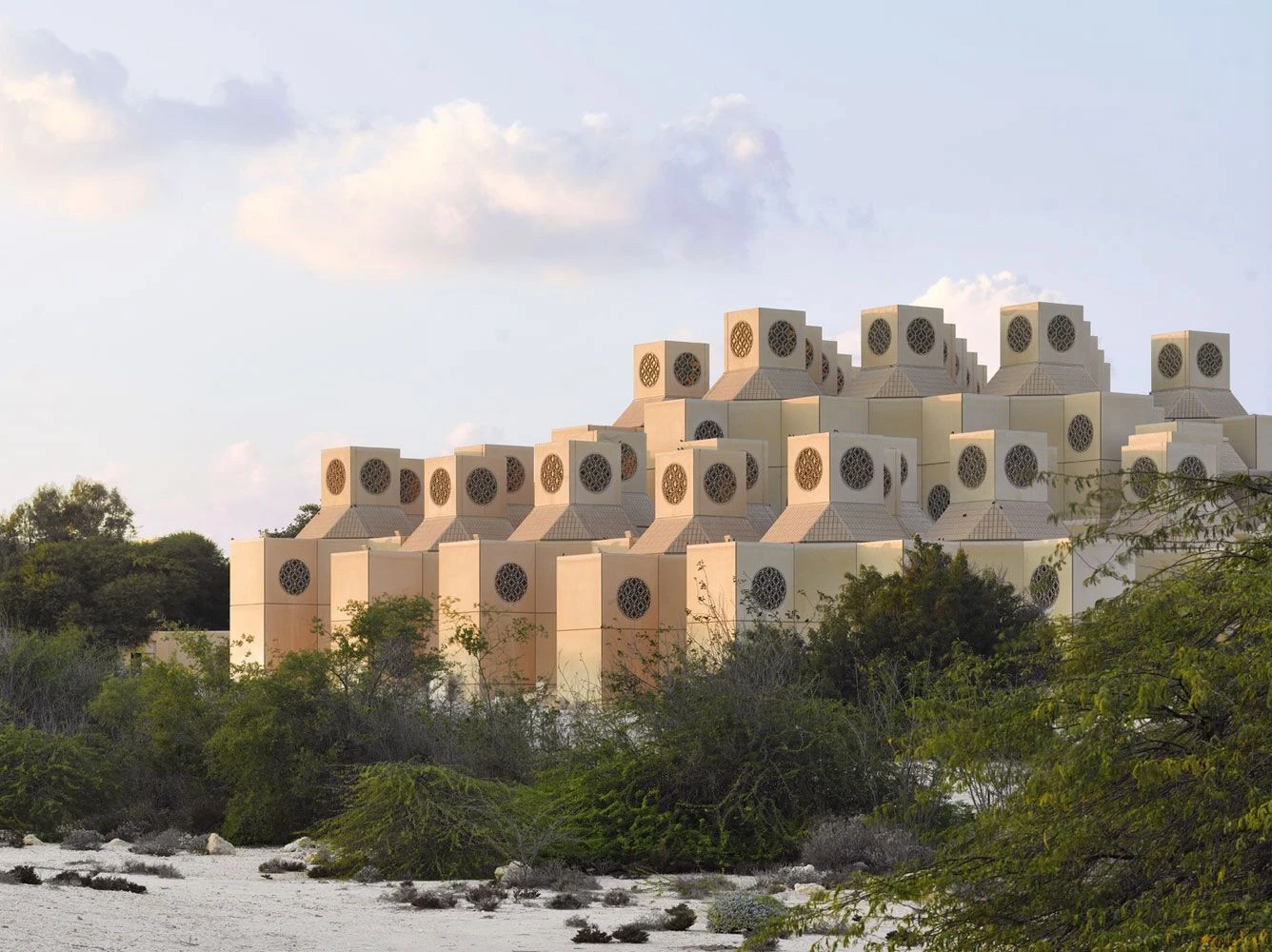
El Kafrawi replaced the need for constant air conditioning with an ingenious interplay between wind and shade. By integrating hundreds of wind catchers (malqaf) and mashrabiya screens, he manages to capture the breeze and filter the intense sunlight into a soft play of shadow. The complex, built with modular concrete structures and enriched with calligraphic skylights, is a reinvention of Islamic traditions in the language of modernism.
The Emirates: Space for Interaction
In the Emirates, innovation in education takes on an organic form. The Al Fanar School in Dubai, designed by the local firm Emkaan, breaks with the clinical tradition of rigid school buildings. Here, architecture is directly connected to the way of learning; the building itself functions as an instrument for creative development.
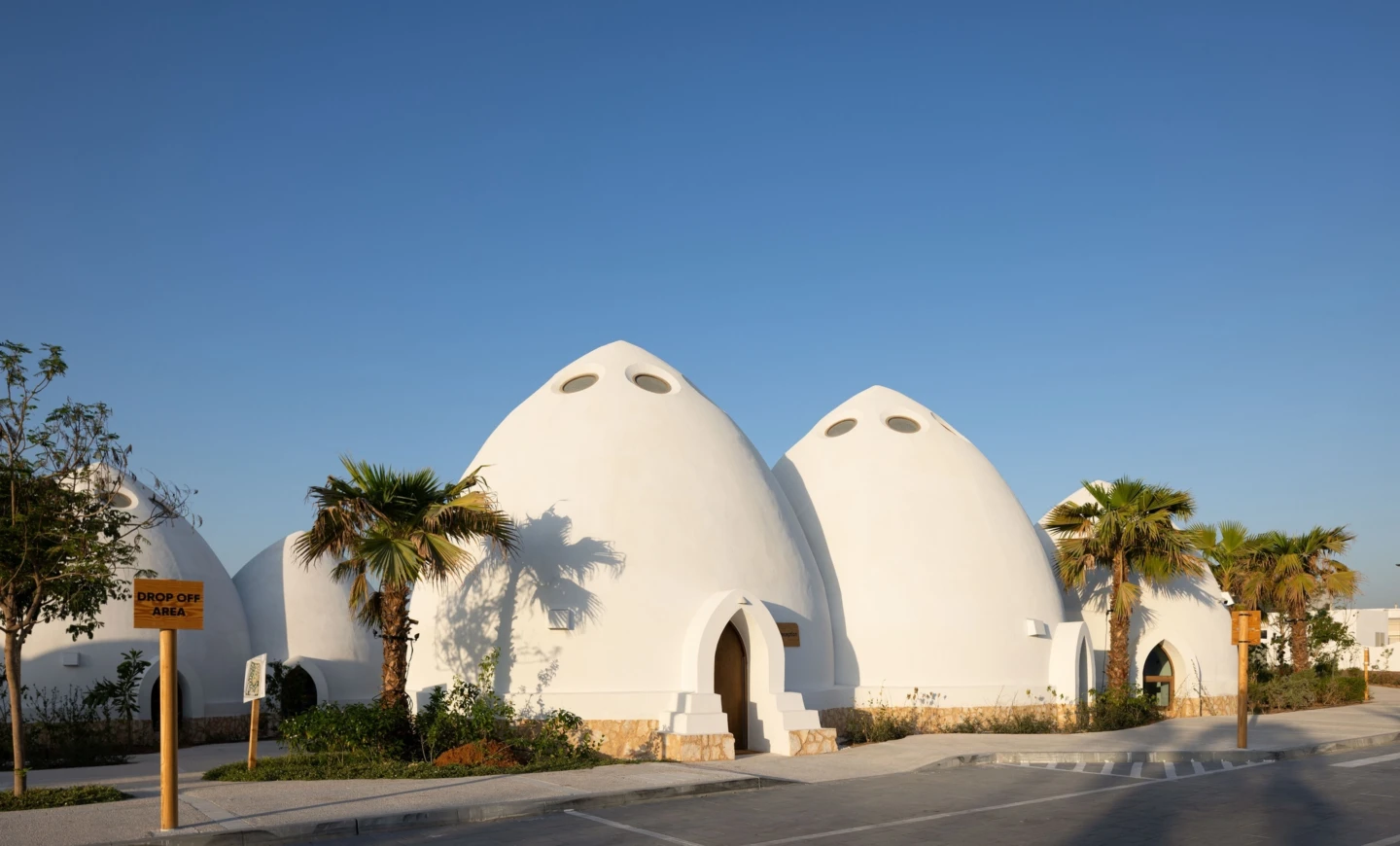
The school consists of clusters of white, cone-shaped domes connected by fluid, winding paths. By avoiding any sharp angles or straight lines, it creates a landscape that invites exploration and movement. Inside the tall domes, circular skylights create a dynamic play of natural light, allowing students to directly experience the rhythms of the day and nature. This design fosters a sense of freedom and curiosity: the architecture does not force stillness, but invites interaction.
My time at Planopli opened my eyes to an intellectual depth that often remains hidden behind the monotonous and commercial architecture dominating the streetscape in the Gulf States. The projects I was able to curate do not function as mere display, but as a necessary and critical response to the clichés that dominate the region. These projects show that architecture in this context only truly gains meaning when it has the courage to use its own complex reality as a foundation.
written by
Mena Alazzawi
Mena Alazzawi is an interior architect and, in 2026, during her studies, she interned at Planopli. She curated the trip to the Gulf states and conducted research into destinations in North Africa. For her graduation project, she investigated how the traces of time in Iraq can function as ornament.