Matter Reclaimed
geschreven door Dominique Pieters | 18 May 2026
Anyone visiting Mallorca and Menorca today with an architectural eye will not discover an idyllic, motionless landscape, but a territory in transition. Behind the façade of tourist iconography, a remarkable reassessment of what building can mean in the twenty-first century unfolds. Here, architecture is being reread as a cultural practice that connects raw materials, labor, and local knowledge. Not as nostalgia, not as aesthetic branding, but as a form of material responsibility.
Anyone visiting Mallorca and Menorca today with an architectural eye will not discover an idyllic, motionless landscape, but a territory in transition. Behind the façade of tourist iconography, a remarkable reassessment of what building can mean in the twenty-first century unfolds. Here, architecture is being reread as a cultural practice that connects raw materials, labor, and local knowledge. Not as nostalgia, not as aesthetic branding, but as a form of material responsibility.
The context of this shift is crucial. From the mid-twentieth century onward, the islands were swept up in unprecedented tourist growth. The construction industry had to keep pace. Hotels, apartments, and infrastructure were built according to international standards that prioritized speed, scale, and economic efficiency. What had been self-evident for centuries—building with marès stone, with local wood, with hydraulic tiles made in small workshops—was displaced by concrete, steel, and imported finishing systems. Not only materials disappeared, but knowledge as well. Craftsmen put down their tools. Workshops closed. The chain between quarry, workshop, and building site was broken.
What is happening today in Mallorca and Menorca can only be understood against this background. The contemporary architectural movement on the islands is not a stylistic experiment, but an attempt to restore that broken chain. In theoretical terms, this aligns with thinking around critical regionalism, as Kenneth Frampton once formulated it: a critical reinterpretation of place and climate as a counterweight to universal modernity. But where critical regionalism in the 1980s mainly spoke of tectonics and sensory experience, the current movement is explicitly ecological and economic. It is not only about the tactility of stone or the shade in a patio, but about where materials come from, who produces them, and what ecological cost they carry.
Marès stone is emblematic in this regard. This Pleistocene sandstone, formed from compressed sea sands and shell remains, lies just beneath the surface across large parts of Mallorca and Menorca. For centuries it was the dominant building material: from Palma Cathedral to La Lonja and countless village houses. Its porous structure regulates temperature and moisture; its thermal inertia makes it particularly suitable for the Mediterranean climate. In the twentieth century, marès was reduced to a decorative element, overshadowed by concrete structures. Today it is once again being used structurally. Not as a nostalgic gesture, but as a rational choice within a climate-conscious building practice.
The Líthica quarry on Menorca makes this material genealogy visible. What was once an industrial site is now read as landscape memory. The cut stone walls show not only extraction, but labor and time. Architecture here emerges not through addition, but through release. The landscape itself becomes space. This rereading of the quarry is exemplary of a broader shift: raw material is no longer seen as an anonymous stockpile, but as a culturally and geographically bound entity.
Within this field, Aulets Arquitectes operates as one of the most coherent voices. Their understanding of “non-extractive architecture” is not a rhetorical slogan, but a concrete practice. With the initiative Amarar, they explore how wood, despite the presence of extensive pine forests on Mallorca, can once again be sourced and processed locally. The fact that the island today imports large quantities of wood while its forests remain underused reveals the paradox of an extractive economy that is both dependent and disconnected. By establishing its own joinery workshop, Aulets shifts the design process from the drawing board to the workbench. Detailing, joints, and tolerances are not solved afterward, but form the starting point of the design. Architecture once again becomes a process of making.
The same applies to the revival of hydraulic tiles through producers such as Huguet. Where in the 1970s nearly all Mallorcan tile workshops disappeared under pressure from the construction boom, Huguet managed to survive and transform itself. Today the company works with international firms such as Herzog & de Meuron, giving traditional cement tiles and terrazzo a contemporary role. Craft is not museumified here, but updated. The tile carries knowledge of pigment, aggregate, and gesture; it embodies a continuity that becomes relevant again within a global architectural culture.
This movement toward material reclamation finds its most radical expression in the social housing of the Instituto Balear de la Vivienda, IBAVI. Where social housing elsewhere is often synonymous with cost optimization and standardization, IBAVI uses its projects as research platforms. Materials are evaluated on the basis of carbon emissions, origin, and thermal performance. In projects in Palma, marès walls and even vaults are used to minimize concrete. What was once considered archaic is being reexamined as technology. Here the order of the design process shifts fundamentally: not form first and then material choice, but material as the starting point of architecture. At a time when the construction sector worldwide is responsible for a significant share of CO₂ emissions, IBAVI positions social housing as a laboratory for decarbonization.
The presence of internationally renowned figures such as Jørn Utzon and Joan Miró takes on a new meaning within this framework. Utzon’s Can Lis and later Can Feliz are not exotic detours by a modernist, but deeply rooted studies in local materiality. His use of marès, his orientation toward sun and wind, show how modernism can merge with territory. Miró’s studio complex on Mallorca confirms the island as a productive space, where light and landscape become part of the creative process. Both figures legitimized the island as a place of seriousness, not merely as a refuge.
What unfolds in Mallorca and Menorca can therefore be understood as a pursuit of material sovereignty. This concept refers to a region’s ability to manage its own raw materials and flows of knowledge. It is not a closed regionalism; international influences remain present. But they are integrated without uprooting. Architecture emerges not despite the ground, but thanks to it.
In an era in which globalization and the climate crisis are putting pressure on building practice, the Balearic Islands offer an unexpected lesson. Progress does not have to mean severing ties with local matter. On the contrary, perhaps progress begins precisely with relearning how to read the ground beneath our feet.
written by
Dominique Pieters
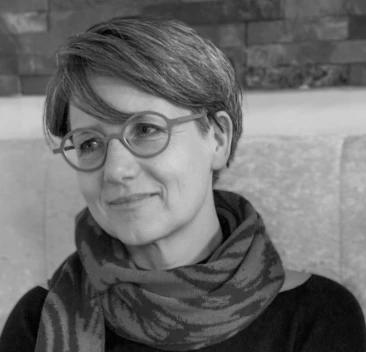
Dominique is the founder and creative director of planopli. She is an architect by training, author, and architecture journalist for (inter)national magazines. Previously, she was artistic director of Archipel and taught at TU Delft and KU Leuven.
