the poetic power of detail
Portugal
Inscriptions are possible until 22 January 2027.
Along the Atlantic coast, in historic cities and quiet villages, we encounter buildings rooted in centuries-old crafts and materials, yet open to contemporary experimentation and international influences. This journey offers a unique opportunity to explore Portuguese architecture of the past decades.
Porto forms the heart of a fascinating architectural tradition known as the “School of Porto.” Since the 1950s, under the leadership of Carlos Ramos, the architecture institute has evolved into a vibrant platform for debate, research, and design, firmly embedded in the social and cultural reality of the city.
The influence of Fernando Tavora is unmistakable: his approach, in which architecture is seen as a continuous dialogue with the environment, tradition, and human scale, shaped multiple generations of designers, including the internationally acclaimed Alvaro Siza and his student Eduardo Souto de Moura. In their work – from renovations of historic monasteries to minimalist cultural centers – a subtle balance is achieved between monumental presence, poetic simplicity, and respect for material and context.
Beyond the iconic work of Fernando Tavora, Alvaro Siza, and Eduardo Souto de Moura, a new generation of architects such as Fala Atelier, Aires Mateus, and BAK Gordon Arquitectos demonstrates how local traditions, simplicity, and precision can be translated into contemporary projects. Their work emphasizes light, material, scale, and rhythm, creating spaces that resonate both functionally and poetically, often subtly integrated into the urban fabric and landscape.
During the journey, we will explore how architects allow historic structures to live on and evolve in contemporary projects, from urban interventions to private residences. Portugal thus reveals an architectural landscape rich in both heritage and experimentation, a place where history and future, local identity, and global inspiration converge.
While the exact itinerary is still being finalized, this journey promises an in-depth look at an architectural practice that is locally rooted yet resonates globally.
More information about the final program will follow.
Porto
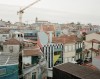
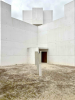
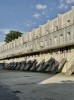
Porto occupies a unique position within the history of European architecture. Over the course of more than half a century, it developed a design culture of international significance while maintaining a profound connection to place, landscape, and society. The region has become the setting for an architectural tradition where continuity takes precedence over fashion, and where each generation builds upon the ideas and achievements of those who came before.
Throughout this journey, we explore the evolution of this tradition through a selection of buildings that have become essential references in contemporary architecture. We will visit the work of Fernando Távora, Álvaro Siza Vieira, and Eduardo Souto de Moura, three architects who have each contributed to the international recognition of the so-called Porto School. From early projects along the Atlantic coast to cultural institutions, housing developments, and urban interventions, these works reveal an architecture that continually engages with its context.
The coastline of Matosinhos and Leça da Palmeira provides a natural starting point. Here, architecture and landscape merge seamlessly in projects such as the Boa Nova Tea House, the Piscina das Marés, and Quinta da Conceição. Further into Porto, we examine how these same design principles are translated into an urban context through projects including SAAL Bouça, the Serralves Museum, the Faculty of Architecture, Casa da Música, and its surrounding public realm.
Alongside these now canonical works, we also turn our attention to the generation shaping architectural discourse in Portugal today. Projects by Fala Atelier and depA Architects demonstrate how themes such as materiality, use, collectivity, and spatial precision continue to evolve within contemporary practice. Their work illustrates that Porto’s architectural culture is not a closed chapter, but a living tradition that remains open to reinterpretation and renewal.
What makes this region particularly remarkable is not only the quality of its buildings, but also the close relationship between education, practice, and social engagement. The projects we encounter reveal an understanding of architecture as a cultural discipline—one that continually negotiates its relationship with history, landscape, and changing social realities.
Porto offers a unique opportunity to experience one of Europe’s most influential architectural traditions firsthand and to gain deeper insight into the ideas, buildings, and designers that have shaped it.
Aveiro
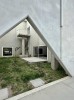
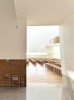
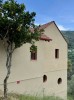
The region between Porto, Braga, and Aveiro offers an exceptional insight into the development of Portuguese architecture over recent decades. In contrast to the metropolitan context of Porto, here architecture engages with different challenges related to landscape, heritage, infrastructure, and regional development. This setting has fostered an architectural culture distinguished by its strong attention to context, construction, and cultural continuity.
Over the course of these three days, we will explore how architects in Northern Portugal address the relationship between building and territory. The selected projects illustrate diverse approaches to housing, workplaces, religious architecture, infrastructure, and public facilities. Together, they provide a broad overview of the themes that have shaped Portuguese architecture over the past half century.
Particular attention will be given to the work of Álvaro Siza Vieira and Eduardo Souto de Moura. Their buildings demonstrate how architecture can build upon the specific qualities of a place without resorting to regionalism or purely formal expression. The Santa Maria Church in Marco de Canaveses, the Municipal Stadium of Braga, the House in Baião, and Siza’s Water Tower each represent significant moments within their respective oeuvres and illustrate the international relevance of Portuguese architectural culture.
The programme also highlights a younger generation of architects who continue to develop this tradition within contemporary social and economic contexts. The Interpretation Centre of the Romanesque by Spaceworkers, the Corcet Headquarters by Nuno Melo Sousa, the Municipal Environmental Interpretation Centre, and the House in Ancede by atelier local demonstrate how current design practices respond to questions of sustainability, identity, materiality, and use.
The journey also provides insight into the broader cultural context in which architecture is produced. A visit to the studio of sculptor Paulo Neves reveals how architecture, art, and craftsmanship continue to inform and enrich one another. This exchange between disciplines remains an essential aspect of the design culture that distinguishes Northern Portugal on the international stage.
Lisbon
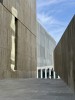
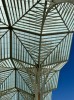
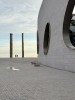
Lisbon offers a unique perspective on the transformation of Portuguese architecture since the end of the twentieth century. As the country’s political, economic, and cultural capital, the city serves as a meeting point for both national and international design practices. Questions of urban growth, heritage, infrastructure, culture, and social change converge here within an architectural production that has become increasingly influential in international architectural discourse over the past decades.
The selected projects provide insight into the diverse scales at which architects operate, ranging from transportation infrastructure and public institutions to housing, educational facilities, and cultural venues. Together, they offer a representative overview of the key architectural developments that have shaped Portugal since the 1990s.
A significant point of departure is the urban transformation associated with Expo ’98. Projects such as Santiago Calatrava’s Gare do Oriente and Álvaro Siza Vieira’s Portuguese Pavilion demonstrate how architecture and infrastructure were employed as instruments of urban regeneration and international positioning. These interventions represent a pivotal moment in Lisbon’s recent history and continue to serve as important references for understanding the relationship between architecture, public space, and urban development.
The programme also examines the role of cultural institutions as catalysts for architectural innovation. The renewed Gulbenkian Art Centre by Kengo Kuma & Associates, the National Coach Museum by Paulo Mendes da Rocha, MMBB and Ricardo Bak Gordon, the Champalimaud Foundation by Charles Correa Associates, and the Paula Rego House of Stories by Eduardo Souto de Moura illustrate how architecture can contribute to the creation of new cultural and public landscapes. These projects reveal different approaches to representation, institutional identity, and the relationship between building and context.
Residential architecture also occupies an important place within the programme. Projects by Aires Mateus and BAK Gordon Arquitectos provide insight into how contemporary Portuguese architects address issues such as density, existing urban fabrics, materiality, and the organisation of domestic space. Their work demonstrates how architecture can generate new spatial possibilities within complex urban environments.
Particular attention is given to the younger generation of architects currently shaping Portugal’s architectural landscape. Projects by ELEMENTAL, Miguel Marcelino, Célia Gomes & Pedro Machado Costa, and Matos Gameiro Arquitectos & Atelier Bugio illustrate how contemporary design practices engage with societal challenges related to education, sustainability, inclusion, and collective use. Their work reflects an architecture that extends beyond formal concerns and positions itself within broader social and institutional frameworks.
By bringing together projects from different generations, programmes, and design approaches, this journey offers a comprehensive understanding of contemporary Portuguese architectural culture.
Setúbal
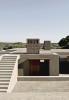
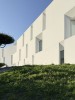
The region between Lisbon and Setúbal offers valuable insight into the ways contemporary Portuguese architecture engages with questions of housing, care, education, and territorial development. Beyond the metropolitan context, different spatial challenges emerge, placing particular emphasis on the relationship between buildings, landscape, and community.
The selected projects demonstrate how architecture can respond to societal needs while maintaining strong spatial and cultural ambitions. Quinta da Malagueira by Álvaro Siza Vieira serves as an important reference point within the programme. Internationally recognised as a landmark housing development, it made a significant contribution to debates on social housing, urban growth, and collective forms of living, and remains a relevant case study within contemporary architectural discourse.
The work of Aires Mateus provides further insight into contemporary approaches to housing and care. The House in Barreiro and the Home for the Elderly in Alcácer do Sal illustrate how architecture can create meaningful living environments through a thoughtful use of space, light, and materiality. The School of Arts at the University of Évora by Ventura Trindade Arquitectos also offers an opportunity to explore the role of architecture within educational institutions and the relationship between learning, social interaction, and the built environment.
A central theme of this journey is residential architecture and the relationship between architecture and territory. Over the past two decades, the Comporta region has emerged as an international reference for contemporary housing design. Within its distinctive landscape of pine forests, rice fields, and Atlantic coastline, Portuguese and international architects have explored new ways of living rooted in a strong connection to place.
Particular attention is given to a series of private residential projects in Comporta, including the work of Vincent Van Duysen. These projects, which are rarely accessible to the public, offer a unique opportunity to study an architectural practice in which dwelling, landscape, and lifestyle are closely intertwined. They help explain why Comporta is today considered one of the most compelling contexts for contemporary residential architecture in Europe.
programme
onder voorbehoud
Porto
Metro Casa da Musica, Eduardo Souto de Moura, 2005
Casa da Musica, Rem Koolhaas, 2005
Social housing SAAL Bouça, Álvaro Siza Vieira, 1978/2006
Casa d’Abreu Neto, Álvaro Siza Vieira, 1957
Quinta da Conceição Park, Fernando Távora, 1961
Piscina da Quinta da Conceição, Álvaro Siza Vieira, 1965
Piscina das Marés de Leça da Palmeira, Álvaro Siza Vieira, 1966
Boa Nova Tea House, Álvaro Siza Vieira, 1963/2004
Casa da Arquitectura, Guilherme Machado Vaz, 2007
143, Fala Atelier, 2025
Faculdade de Arquitectura da Universidade do Porto, Álvaro Siza Vieira, 1996
Igreja Senhora da Boavista, Agostinho Ricca, 1979
Mosteiro de Leça do Balio, Álvaro Siza Vieira, 2016
Gondomar, Álvaro Siza Vieira, 2007
Musseu Serralves, Álvaro Siza Vieira, 1999
Chicken coop, depa Architects, 2024
Educational Pavilion, depa Architects, 2024
Porto tot Aveiro
Estádio Municipal de Braga, Eduardo Souto de Moura, 2003
Interpretation Centre of the Romanesque, Spaceworkers, 2018
Corcet Headquarters, Nuno Melo Sousa, 2024
Santa Maria Church de Canaveses, Álvaro Siza Vieira, 1996
House in Baião, Eduardo Souto de Moura, 1993
House in Ancede, atelier local, 2023
Atelier Paulo Neves
Centro Municipal de Interpretação Ambiental, Machado Costa & Célia Gomes, 2016
Water tower, Álvaro Siza Vieira, 1989
Lissabon
Gare do Oriente, Santiago Calatrava, 1995
Pavilhão de Portugal, Álvaro Siza Vieira, 1998/2025
Energia de Portugal HQ, ELEMENTAL, 2024
Energia de Portugal HQ, Aires Mateus, 2015
Centro de Arte Gulbenkian, Kengo Kuma & Associates, 2024
Two houses in Santa Isabel, BAK Gordon Arquitectos, 2009
Casa em Campo de Ourique, Aires Mateus, 2019
Museu Nacional dos Coches, Paulo Mendes da Rocha & MMBB Arquitetos & Ricardo Bak Gordon, 2015
Champalimaud Foundation, Charles Correa Associates, 2011
MAAT, AL_A, 2016
Luís de Freitas Branco School, Célia Gomes & Pedro Machado Costa, 2016
Laje football field, Miguel Marcelino, 2025
Casa das Histórias Paula Rego, Eduardo Souto de Moura, 2008
Museu do Farol de Santa Marta, Aires Mateus, 2007
Igreja e Centro Paroquial São José da Boavista, Matos Gameiro Arquitectos & Atelier Bugio, 2025
Lissabon tot Setúbal
House in Barreiro, Aires Mateus, 2023
Quinta da Malagueira, Álvaro Siza Vieira, 1977
Escolas de Artes da Universidade de Evora, Ventura Trindade Arquitectos, 2009
Home for the elderly, Aires Mateus, 2011
Setúbal
Casa M, Vincent Van Duysen, 2019
Centro de Convívio de Grândola, Aires Mateus, 2016
JNCQUOI, Vincent Van Duysen, 2023
Andere projectbezoeken zijn nog onder voorbehoud van bevestiging.
profiles


practical
The planopli tour guides will assist you in Dutch, French, and English. Guided tours by local guides and/or architects are in English (if necessary, planopli tour guides will provide a concise translation).
Standard information for package travel contracts
The combination of travel services offered to you is a package holiday within the meaning of Directive (EU) 2015/2302, transposed by the law of 21 November 2017 on the sale of package holidays, linked travel arrangements and travel services.
Consequently, you can claim all EU rights applicable to package holidays. planopli is fully responsible for the proper execution of the entire package holiday.
planopli also has the legally required protection to reimburse you and, if transport is included in the package holiday, repatriate you in case it becomes insolvent.
payment info
11 days, 10 nights
The price of this journey is €4,400 per person, based on double occupancy and a minimum of 15 participants.
Should you wish to book a single room, please contact us for further information.
Local transportation
Throughout the journey, we will travel using public transportation and a private coach.
Included
- direct flight from Brussels Airport on Wednesday, 19 May 2027, including 23 kg checked baggage
- direct return flight from Lisbon on Saturday, 29 May 2027, including 23 kg checked baggage
- local transportation between the different destinations
- admission tickets to museums included in the programme
- (exclusive) access to buildings included in the programme, including contributions and courtesy fees for architects and private owners who make these visits possible
- academic and architectural guidance by Jarnie T’Jonck and Dominique Pieters
- 10 nights’ accommodation with breakfast
- use of audio headsets throughout the trip
- 11-day group travel assistance insurance
- administrative and organisational support
- travel guide: a custom-designed, professionally printed travel guide prepared by Planopli
Not included
- other meals and beverages
- optional cancellation insurance (6.5% of the total travel price)
Payment
- registration becomes definitive upon payment of a deposit of €2,200 per traveller, to be transferred to account BE25 7350 4701 5682, mentioning the name of the Planopli trip (Portugal) followed by your name.
- by making this payment, you acknowledge and accept Planopli’s General Terms and Conditions and Special Terms and Conditions of Sale, and agree that Planopli cannot be held liable for accidents, theft, or loss of personal belongings.
- pursuant to Article VI.45, 11° of the Belgian Code of Economic Law, no withdrawal period applies.
- the remaining balance is due 30 days prior to departure.