el aire es azul
Mexico
We are with sufficient travellers, but 7 travellers are still welcome.
When Mexico and art are mentioned in the same breath, the mind wanders to Frida Kahlo and the heart immediately beats to the rhythm of the passion radiating from her work. A closer look also overwhelms the fervour of Mexico’s world-renowned muralists Diego Rivera, José Clemente Orozco and David Alfaro Siqueiros… and of pre-Columbian and pre-aztec murals. Architecture then, as now, was there not only as a support for this art, but also as its embodiment. We seek this interaction in a very specific selection of art-architecture. We make the most meticulous museum and gallery choices for you and pay attention to how spatiality can support and lift art. Artist studios and homes are also part of this exploration. We visit the homes that shelter and shape artists’ imaginations.
These places open a window on both the artist and the work, reminding us that what we may initially consider the timeless and universal truth of the work of art cannot be detached from the complex peculiarities of its spatial and material origin. Works of art that originate in or reflect on architecture and spatial themes are also part of the exploration. The Mexican individuality that occurs in the visits consists of several guidelines that our selection weaves together:
El muro (the wall)
The wall as an architectural element plays a role in both the muralists from a revolutionary idea to make art as public as possible, and in the artist’ studios to make just a movement ‘inward’ as in Casa Iturbide by Mauricio Rocha and Casa Pedro Reyes. At Casa Wabi, the special relationship to the wall sharpens the conflict between Japanese and Mexican culture. In other architectural works, it acts as a stage to make bodies, lights, views and sounds perceptible.
Cielo y tierra (heaven and earth)
The cosmological worldview and the worship of the celestial vault and bodies are found in pre-Aztec and pre-Columbian architecture such as in Teotihuacán, but also the relationship to heaven in contemporary architecture is striking. The frequent use of open rooms without a roof, building on the long Mexican tradition of courtyards, provide a place to look at the sky, hear the landscape, and feel the passage of time. The earth and the soil in many cases require a specific treatment because of the tectonics and the raw volcanic rocks, or the volcanic stones are used as building elements in the architecture. Attention to the use of local land when creating brick architecture or works of art is also reflected in many projects, in many cases it gives a rich grain to the whole.
Luz y colour (light and colour)
The colours of the Aztec murals form the abstract protagonist in countless poetic projects. And all that under the blue sky, el cielo azul. The deep blue of Frida Kahlo. The cutting red of Diego Riveira or Juan O’Gorman. The dazzling gold of Matthias Goeritz. The sliding sloping bright white of Felix Candela. The sun-soaked ochre by Ricardo Legoretta and the mysterious deep pink by Luis Barragan.
la ciudad de México

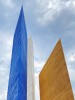

Founded in 1325, Tenochtitlán was already one of the largest cities in the world in the early 16th century with some 200,000 inhabitants. After the verovering and desolation by the Spanish Hernan Cortés, it rose like a phoenix from its ashes. Mexico City is a city of millionsobsed by its past, but open to everything new. A crosspollination that brings fascinating (presentday) architecture, carried by a passionate people.
Valle de Bravo


Valle de Bravo lies on the shores of Lake Avándaro, southwest of Mexico City and west of Toluca. A well-known holiday resort for many Mexicans.
Cuernavaca


Because it averages 27°C all year round, little Cuernavaca, just onehalf an hour’s drive from Mexico City, is known as the city of eternal spring. For centurieslong, it has been the holidaydestination for Mexico City’s inhabitants: for the Aztec monarchs, for the Spanish colonialists and for the presentday inhabitants. A dayouting to Cuernavaca to visit both modernistic (Félix Candela) and presentday (Productora) architecture is a gesuccessful breathbreak during the intensive stay in Mexico City.
Oaxaca de Juárez


After an intensive and longdurig stay in Mexico City, these visits will complete our Mexican architecture, culture and nature lexicon at a meanly pace.
The eyecaressing Oaxaca came before the footlight,after all, capital of Mexican contemporary art, laced with genius loci.
Puerto Escondido

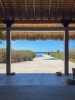

Although there is no exact record of when Puerto Escondido began to become a reference point for contemporary Mexican architecture, it has experienced several waves; perhaps the first of these began in 2016 when construction began on Casa Wabi, a project by Tadao Ando.
programme
programme subject to change
MEXICO CITY
BARRAGÁN
Luis Barragán casa y estudio, Luis Barragán, 1948
Casa Gilardi, Luis Barragán, 1976
Capilla Las Capuchinas Sacramentarias, Luis Barragán, 1953
Torres Satelite, Luis Barragán & Mathias Goeritz, 1957
Plaza Bebederos, Luis Barragán, 1960
Los Clubes/cuadra san Cristobal, Luis Barragán, 1967
UNIVERSITY CAMPUS (UNAM)
Masterplan UNAM, Mario Pani & Enrique del Moral, 1948
Estadio Desportivo de Ciudad Universitaria, Augusto Perez Palacios, Jorge Bravo, Raul Salinas, 1952
Biblioteca central universitario, Juan O’Gorman and Diego Rivera, 1950
Pabellón de Rayos Cosmicos, Felix Canderla, 1951
MUAC Museo Universitario Arte Contemporaneo, Teodoro González de León, 2008
OTHER MODERNISTIC HIGHLIGHTS
Edificio Bacardi, Mies Van der Rohe, 1961
planta Bacardi, Félix Candela, 1949
Los Manantiales, Félix Candela, 1958
Archivo Diseño y Arquitectura, Arturo Chavez Paz + Fernando Romero, 1952
CONTEMPORARY ARCHITECTURE GEMS
Liga, Productora, 2022
plaza Zarco, Productora, 2016
Pilares, AGENdA, 2023
Pilares La Pulga, Alberto Kalach, 2022
Torre 41, Alberto Kalach, 2014
ARCHITECTURE RELATED ART
galeria Kurimanzutto, Alberto Kalach, 2008
casa Kurimanzutto, Alberto Kalach,
estudio Iturbide, Rocha Carillo, 2015
estudio Pedro Reyes
estudio Edna Pallares, Vrtical
estudio Enrique Jzik
galeria Peana
Laboratoire
casa Nancarrow, Juan O’Gorman, 1929
polyforum Siqueiros, 1967 + 2012
casa Azul de Frida Kahlo
MUSEA
Museo Jumex, David Chipperfield, 2013
Museo Anahuacalli, Diego Rivera, 1945
uitbreiding Museo Anahuacalli, Mauricio Rocha, 2020
Museo Rufino Tamayo, Teodoro González de León y Abraham Zabludovsky, 1972
Museo de Arte Moderna
VALLE DE BRAVO
a selection of private holiday houses (or all of them ;-)):
casas Barranca Valle, Alberto Kalach, 2015
casa Lourdes, Ricardo Legoretta, 1973
entre Pinos, Hector Barroso, 2017
casa Kalach, Alberto Kalach, 1993
casa Bruma, Fernanda Canales, 2017
casa Terreno, Fernanda Canales, 2018
casa Cosecha de lluvia, Rob Hutch, 2020
casa Catarina, Hector Barroso, 2022
casa Peñitas, Mauricio Rocha, 2022
casa 720, Fernanda Canales, 2023
CUERNAVACA
La Tallera – Museum Siqueiros Cuernavaca, Frida Escobedo, 2012
MMAC Juan Soriano, JSa, 2018
centro de desarollo comunitario Los Chocolates, 2018
catedral de Cuernavaca met glasramen door Mathias Goeritz
centro cultural Teopanzolco, Productora, 2017
OAXACA
centro cultural San Pablo, Mauricio Rocha, 2012
studio artist Sergio Hernandez, Alberto Kalach, 2008
centro de las artes de San Agustin Etla (CASA), Francisco Toledo
school of Visual Arts of Oaxaca, Mauricio Rocha, 2008
PUERTO ESCONDIDO
CASA WABI
artist studio Bosco Sodi + observatory + public spaces, Tadao Ando
landscape and gardens, Alberto Kalach
clay pavilion, Alvaro Siza
pavilion for high temperatures (clay), Alberto Kalach
chicken pavilion, Kengo Kuma
Guayacán nursery, Jorge Ambrosi y Gabriela Etchegaray
compost pavilion, Gloria Cabral y Solano Benítez
orchid pavilion, Bernardo Quinzaños
mushroom pavilion, OMA
AND FURTHER…
Meridiano (founded by Nicholas Olney & Boris Vervoordt), Axel Vervoordt & Tatsuro Miki
casa Zicatela, Alberto Kalach, 2018-2022
some holiday homes according to availability by Ludwig Godefroy, BAAQ’, Aranza de Ariño, S-AR, Ambrosi y Etchegaray, Alberto Calleja,…
profiles
practical
The planopli tour guides will guide you in Dutch and can also assist you in French or English. Guided tours by local guides and/or architects are in English or French (if necessary, planopli tour guides will provide a concise translation).
visa: not required
vaccinations: not required. However, some vaccinations are recommended, see wanda.be
Standard information for package travel agreements
payment info
€6.900 for 15 days, 13 nights****
if min. 20 max. 40 travellers
single supplement: €850
transportation on site
- on Sunday morning, downtown Mexico City is traffic-free: we opt for half a
day of cycling - sunrise in the Chinampas of Xochimilco is unforgettable by trajinera (canoe)
- two domestic flights ensure a smooth visit programme
- in the centre of Oaxaca de Juárez and in Punta Pajaros (Puerto Escondido) we do the
visits on foot - the other visits will take place by chartered bus
included
- information evening 1 month before departure with Mexican snacks and drinks
- intercontinental flights, economy class
- 2 domestic flights with Aeromexico: Mexico City > Oaxaca and Puerto Escondido > Mexico City, including 23kg hold luggage
- 6 airport transfers with chartered coach
- 7 days of comfortable coach + bus driver tips for local transfers
- bicycle hire
- trajinera (canoe)
- 13 overnight stays with breakfast
- 1 welcome lunch, 1 breakfast during the boat trip on the Chinampas, 1 picnic in reserva las Peñitas, 1 mezcaldegustation in Oaxaca
- meetings with local artists, architects and experts
- (exclusive) entrances to buildings
- entrance tickets to museums included in the programme
- gifts for artists/architects/owners who open their homes/studio exclusively for us
- use of audiophones
- group travel assistance insurance
- expertise of at least two tour guides
- back office
- log guide: travel guide compiled, designed and professionally printed by planopli with multipurpose cover, city maps, sketch chalk, postcard, pencil,…
not included
- optional cancellation insurance
- lunches (except the 2 lunches at special places, see above)
payment
- registration is final
after payment of the advance of €2,000
to be paid into account BE25 7350 4701 5682
With this bank transfer you declare that you agree to the general and special terms and conditions of sale of planopli and you declare that planopli is not liable for accidents, theft or lost objects that may occur.
based on art. VI.45, 11° of the Economic Code, there is no cooling-off period. - balance 60 days before departure